Key takeaways
- The gap around a closed door tells you where the problem is.
- Loose top-hinge screws are the most common cause of rubbing and missed latches.
- Do not plane a swollen door in humid weather without sealing the cut edge.
- Several sticking doors in one area can point to foundation movement.
In this guide
Read the gap first
Close the door and look at the space between the door and the frame. A healthy door has an even gap along the top and down the latch side. If the gap is wide at the top on the hinge side and the door rubs at the top corner on the latch side, the door is sagging from its top hinge. If light shows through in one spot, or the door scrapes the floor, note where.
For a latch that will not catch, rub a little painter's tape or chalk on the latch, close the door gently, and see where it marks the strike plate. A mark above or below the opening shows which way the door has moved.
Hinges: the most common fix
Open the door and try to lift it by the handle. If it moves up and down at the hinges, the screws are loose. Tightening them often solves the problem. If a screw just spins, the hole is stripped; the hole can be filled with wood and redrilled, or the screw replaced with a longer one.
On the top hinge, swapping one jamb-side screw for a long screw that reaches the wall framing behind the jamb pulls the door back toward the hinge side and often stops rubbing at the latch corner. Worn hinges with sloppy pins can be replaced without changing the door; match the size and the corner shape, square or rounded, so the new hinge fits the existing cutout.
- Door lifts at the hinges: tighten or replace hinge screws.
- Rubs at the top latch corner: pull the top hinge in with a long screw.
- Hinges worn or bent: replace them, matching size and corners.
Strike plate and latch
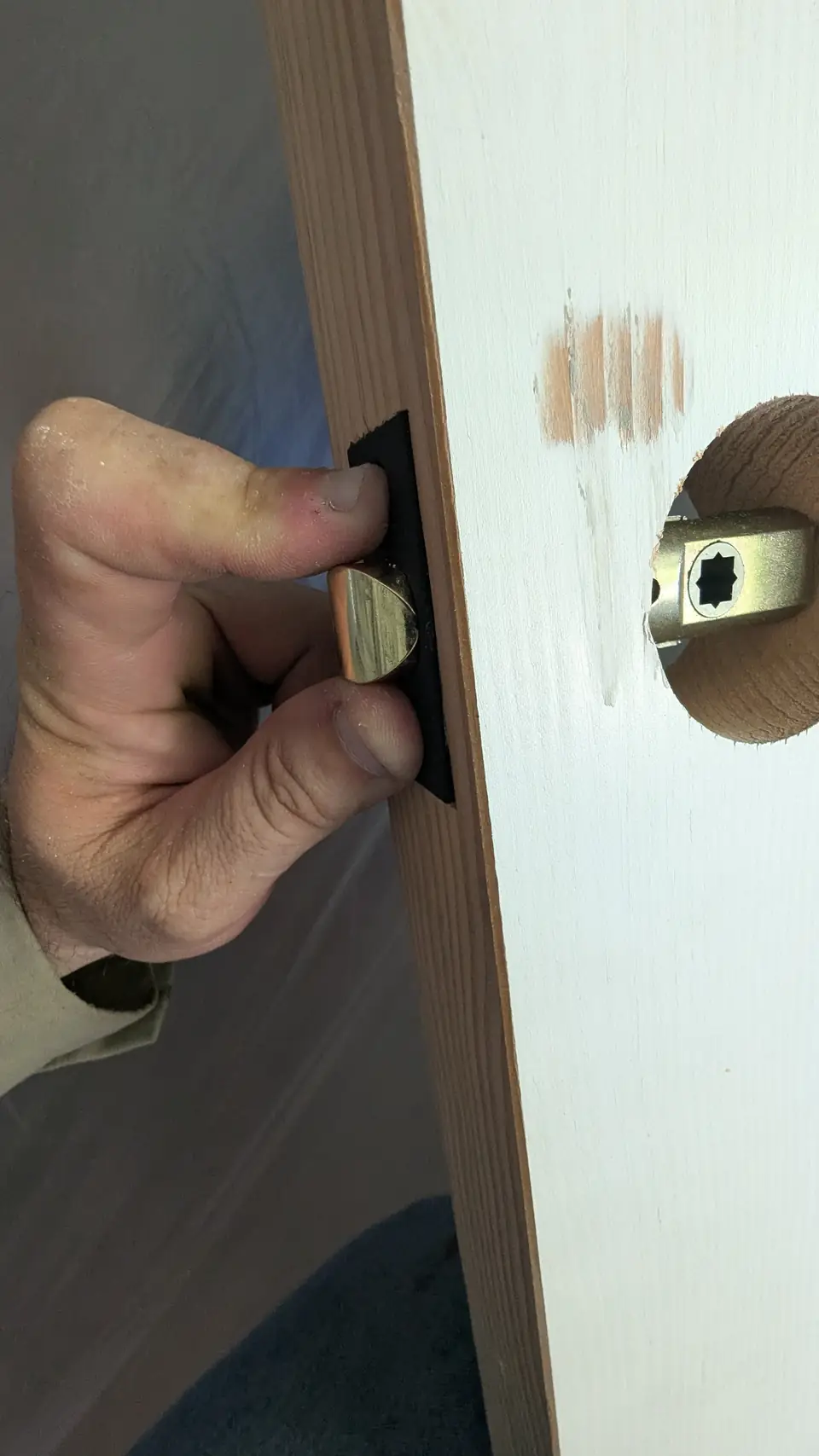
When the latch lands slightly above or below the strike opening, the strike plate can be moved, or its opening enlarged a little with a file. A latch that sticks may just need cleaning and dry lubricant. A deadbolt that is hard to turn usually means the bolt is rubbing the edge of its hole in the frame; the key should turn easily with the door open. Forcing it can damage the lock, so adjust the strike rather than the key.
Door sticking or not closing properly? Tell Daniel about it
Swelling and seasonal sticking
Wood doors take on moisture in humid weather and swell, then shrink again when the air dries out. A door that sticks only in summer is usually doing this. The top and bottom edges are often left unpainted at the factory, and they soak up moisture the fastest.
Planing a swollen door can leave a visible gap when it shrinks back. If a door truly needs trimming, the cut edge must be sealed or painted the same day; bare wood keeps absorbing moisture and the sticking returns. Sometimes the right fix is simply sealing every edge and adjusting the hinges.
Settling and foundation movement
North Texas clay soil swells when wet and shrinks when dry, and houses move with it. When a house shifts, door frames go out of square. Signs include diagonal cracks running up from the corners of door frames, gaps that open and close with the seasons, and several doors sticking in the same part of the house.
A door can be adjusted to work again, and that is often worth doing. But if the cracks are new, growing or widespread, have a structural engineer or a foundation specialist look before more cosmetic work is done.
Exterior doors, and when to replace
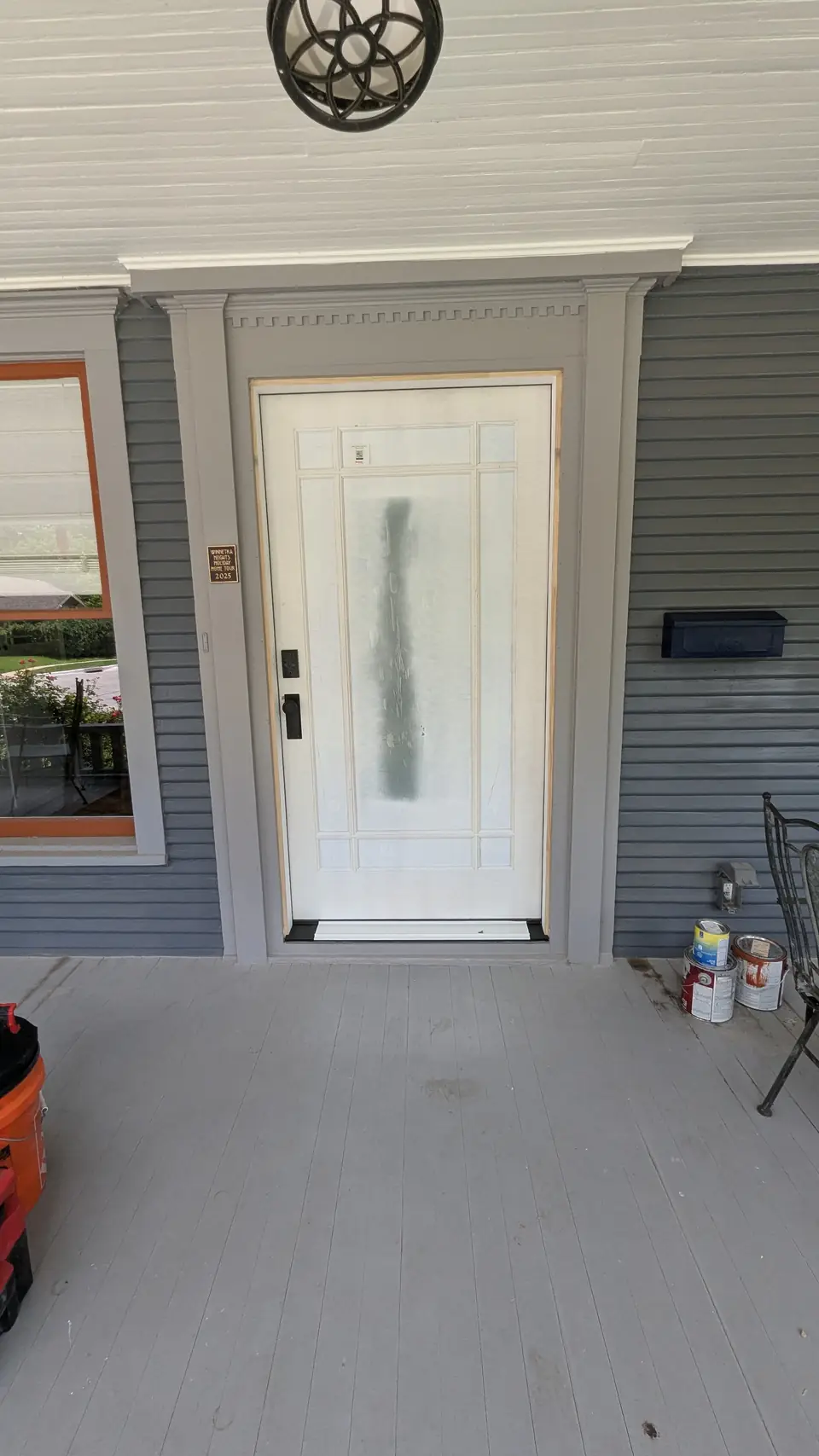
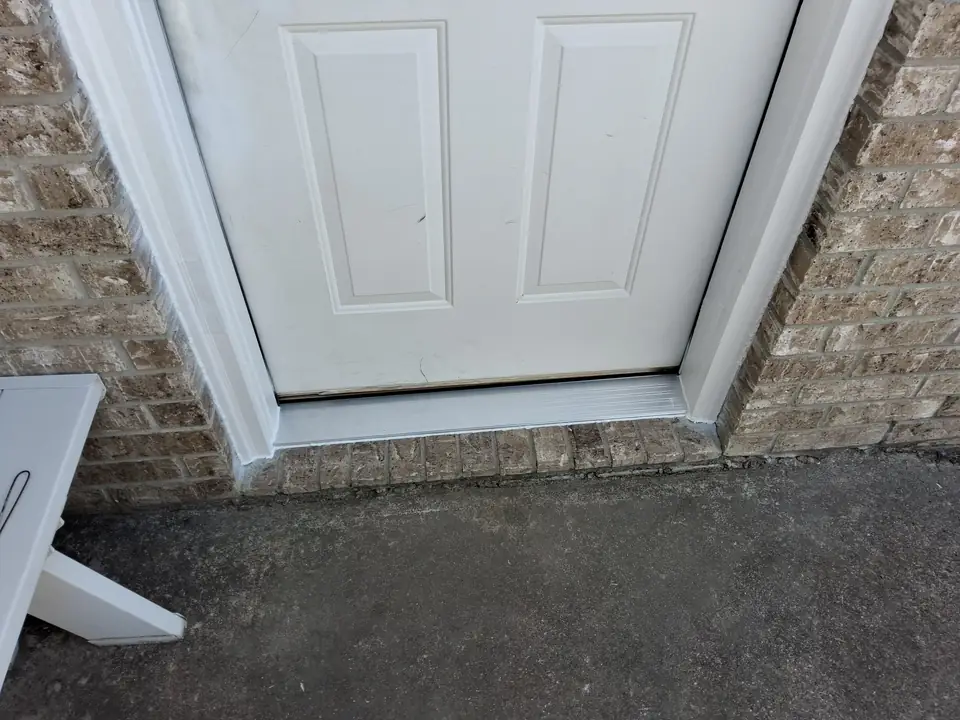
On exterior doors, check the weatherstripping and the threshold. Worn weatherstripping lets in light and air. Weatherstripping that is too thick makes the door hard to close and latch. Many thresholds have adjustment screws that raise or lower them to meet the bottom of the door. Rot at the bottom of the jamb, where water collects, can often be cut out and repaired without replacing the whole frame; Daniel's project photos include exterior door jamb and threshold rot repairs.
Replacement makes sense when the door is warped beyond adjustment, split, coming apart in layers, or rotted through. Short of that, The DFW Handyman can usually make the door close and latch again. Send a photo of the door closed, showing the gap, and a short video of the problem through request service, or read more on door repair.