
Key takeaways
- Know the weight before choosing hardware; a bathroom scale will do.
- Two hanging points keep a frame level; a single wire lets it tilt.
- Use anchors rated well above the weight, or fasten into studs.
- Plaster walls hold well but crack if drilled carelessly.
In this guide
Weigh it and look at the back
Stand on a bathroom scale holding the piece, then subtract your own weight. That number decides everything else. Then turn the piece over. A frame might have a wire, two D-rings, a sawtooth hanger or a cleat. Check that the wire is not frayed and that the screws holding the rings are tight in solid wood; old frames often fail at the back, not at the wall.
A single wire on a single hook puts all the weight on one point and lets the frame swing out of level every time someone brushes past. Two hooks spaced apart, or two D-rings hung directly, keep it level.
Choose hardware for the wall and the weight
On drywall, a screw into a stud is the strongest hold. Between studs, heavy pieces need anchors that spread the load behind the drywall, such as toggle bolts or snap-style toggles. Small plastic expansion anchors are for light items only. Every anchor package lists a rating; that figure comes from ideal conditions, so choose one rated well above the actual weight.
Large mirrors and wide, heavy pieces often go up on a French cleat: two interlocking strips, one on the wall and one on the piece, which spread the weight along the whole width and make leveling simple. Frameless bathroom mirrors usually hang on mirror clips or a channel along the bottom edge.
- Light pieces: picture hooks rated for the weight.
- Heavier pieces: screws into studs, or toggle-style anchors.
- Large mirrors and wide art: a French cleat.
- Frameless mirrors: mirror clips or a bottom channel.
Plaster and older walls
Many older homes have plaster over wood lath instead of drywall. Plaster is hard and holds well, but hammering a nail into it can crack it or knock plaster loose behind the surface. The careful method is a small pilot hole drilled slowly, with painter's tape over the spot to keep the edge from chipping, then a screw or an anchor made for plaster.
Stud finders often read poorly through plaster. A strong magnet that finds the nails holding the lath is a useful trick. Some older rooms also have picture rail molding near the ceiling, made for hanging art on hooks and wire without putting holes in the plaster at all.
Heavy art or a mirror to hang? Tell Daniel about it
Level, height and groupings
Many galleries and designers hang art so the center of the piece sits around 57 to 60 inches above the floor, roughly eye level for an average adult. Over a sofa or console, the piece usually sits a short distance above the furniture instead, so the two read as one group.
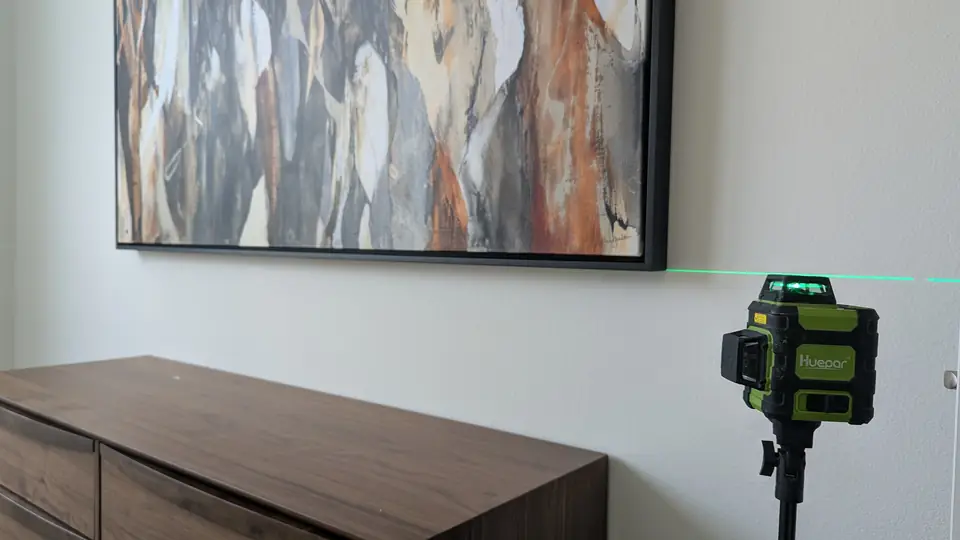
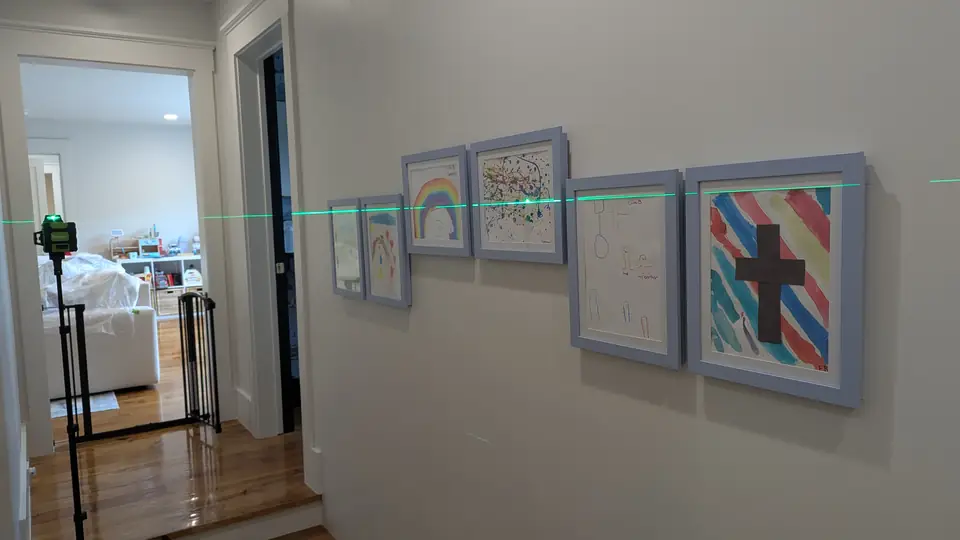
To hang it accurately, measure from the top of the frame down to the hanging point with the wire pulled tight, then mark the wall. For a group, cut paper templates of each piece, tape them up, and adjust until the spacing looks right before drilling. A laser level projects one straight line across the whole wall, which keeps a row of frames lined up far better than a bubble level moved from frame to frame. Small felt bumpers on the bottom corners keep a frame from shifting and marking the wall.
Special cases
Very large mirrors are a two-person lift at the least. The glass is heavier than it looks and can crack if it flexes, so it is carried upright, set onto its bottom support first, then secured at the top.
Moving a piece to a new spot? Old anchors can usually be backed out or pushed into the wall cavity, and the holes filled and touched up, so the previous layout does not show.
- A mirror over a vanity has to clear the backsplash, the faucet, the light fixture and any outlets.
- Heavy glass over a bed deserves a cleat and screws into studs, not hooks.
- A tall mirror leaning on the floor should still be anchored to the wall with an anti-tip strap.
- Exterior walls and bathrooms call for hardware that will not rust.
Getting it done
Gather the pieces in the room where they will hang, note the approximate weight of the large ones, and send a photo of each wall to The DFW Handyman through request service. Daniel's project photos include wall art and mirror hanging with a laser level, and the picture hanging page covers what he takes on.