
Key takeaways
- Move breakables and small furniture out of the work area, and empty any cabinet that needs work inside it.
- Send the list, photos and model numbers ahead, so the right parts and anchors arrive with the handyman.
- Expect floor runners, drop cloths, plastic around dusty work and masking before paint.
- Cleanup means a vacuumed, wiped work area; ask up front what happens to old parts and packaging.
- With a designer or other trades involved, share drawings and decide who signs off.
In this guide
Before the visit: what helps most
- Clear the work area. Move breakables, lamps and small furniture away from walls and doors on the list. Empty the cabinet under a sink that needs work, and clear the closet if the rod is coming down.
- Send the list and photos ahead. One photo per item, with a short note on what you want. How to make a handyman punch list shows how, and estimates from photos covers what photos can and can’t show.
- Have the parts on site. Fixtures, hardware and mounts you have bought, with model numbers, and the leftover paint can for touch-ups.
- Make the decisions in advance. Heights for art and TVs, finishes for hardware, which wall gets the shelf. A visit spent waiting on a choice is a visit cut short.
- Settle pets. Doors will be open and tools will be out. A closed room or a crate keeps everyone calm and keeps pets out of wet paint and dust.
- Plan parking and access. Space near the door for a work vehicle, any gate or building access, and which entrance to use.
- Point out what is delicate. A fragile floor finish, an antique near the work area, a rug that should be rolled up.
Do you need to be home the whole time?
It depends on the job and on what you are comfortable with. Many homeowners are there at the start, to walk the list together, and at the end, to check the work. In between, the reason to be reachable is decisions: a wall opened up to find more damage than expected, a fixture that doesn’t fit the box, a choice between two positions for a shelf.
If you would rather not be there, settle beforehand how the handyman gets in, how the alarm and any pets are handled, and how you will be reached if something needs your decision. Ask about it when you book; questions to ask before hiring a handyman covers this and the other questions worth asking up front.
How your home should be protected
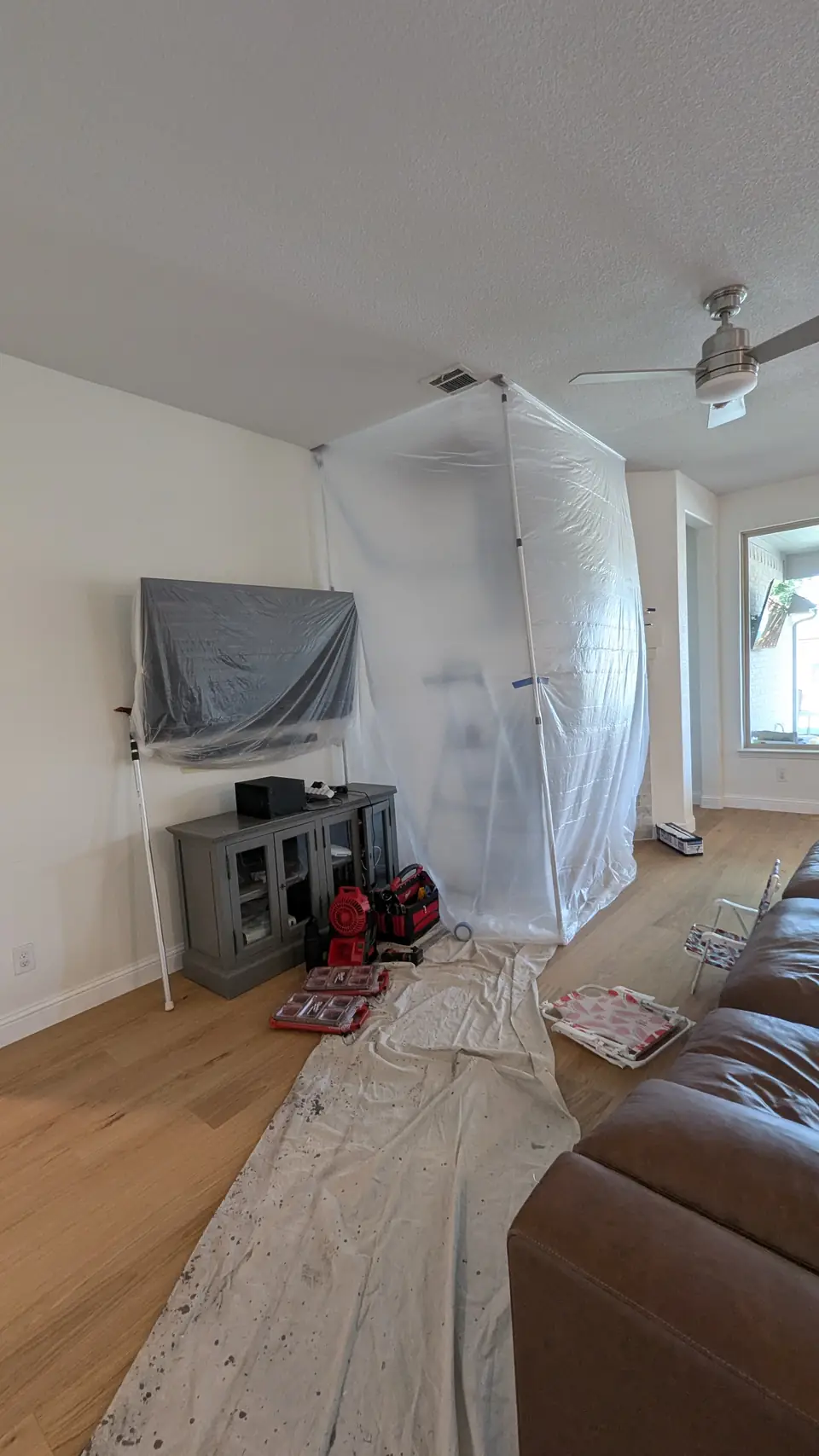
Protection should go down before the first tool comes out. Floor runners cover the path from the door to the work area. Drop cloths go under the work itself and over furniture that can’t be moved. For drywall and ceiling repairs, plastic containment walls go up floor to ceiling around the repair so dust stays inside them; Daniel’s ceiling drywall repair with containment shows this in a lived-in family room, with furniture kept outside the work area.
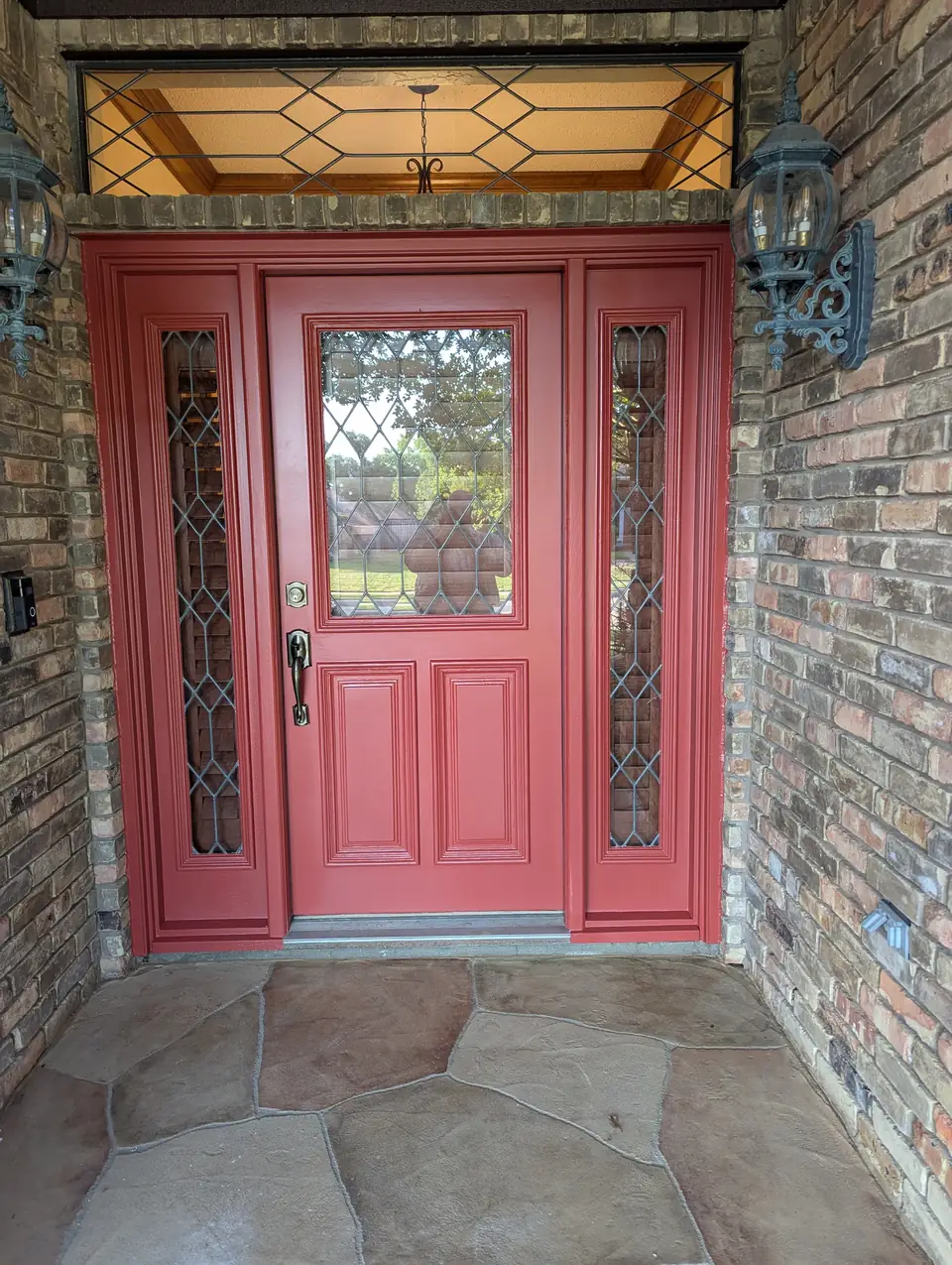
Before refinishing or painting, the surroundings get masked and covered in plastic. On this front door refinish, the entry was enclosed in plastic, the glass masked and the floor covered before any sanding started. Painting and patching are described on our drywall repair and painting pages.
Ready to plan a visit? Tell Daniel about it
Cleanup when the work is done
A shop vacuum on site makes cleanup part of the job, not an afterthought. Expect the work area to be vacuumed and wiped down, drop cloths and runners lifted and folded, and furniture you moved for the work ready to go back. A quick walk-through at the end lets you check each item and look at the room as a whole.
Old parts, packaging and debris are worth asking about up front. Small items such as a replaced lockset or a light fixture’s box are one thing; an old vanity, fence boards or a stack of furniture cartons are another. Agree before the work starts what leaves with the handyman and what stays for your own trash pickup.
Small jobs, and repairs before guests arrive
No job is too small, from a single doorknob to a full day of tasks. Small items tend to sit on the list for months because each one seems too minor to call about. Grouping them makes one visit worthwhile, and a handyman can often fit a short list in alongside bigger work; how soon depends on the calendar at the time, so ask when you send it.
Before the holidays or a family visit, send the list early and mark the date it has to be done by. Put the items guests will notice and use at the top: caulk in the guest bath, a grab bar for an older parent (see grab bars that hold), a loose stair rail, a guest room light, a door that won’t latch, art that has been leaning against the wall since spring.
Working with your designer or other trades
When an interior designer is involved, share their drawings, measurements and product specifications with the handyman before the visit: mounting heights, centerlines, which hardware goes where. Decide who supplies each item, and who makes the final call on the day if something on site doesn’t match the drawing. One decision-maker keeps work moving and avoids doing it twice.
When other trades are working too, order matters. A licensed electrician or plumber runs any new wiring or lines first; patching, painting, trim and hanging come after. Floors go down before baseboard and door work, and art goes up after the painters leave. Pass along contact details so questions go straight to the right person.
Questions that depend on the schedule
Several common questions have answers that depend on the calendar and the job rather than a fixed rule: weekend or urgent visits, how soon an estimate can happen, whether work can be done while you are at work, and how much notice a project needs. Custom carpentry, for instance, involves design, measuring and ordering materials before any work happens at your house, so it needs more lead time than a list of small repairs.
Ask any of these when you get in touch, and you’ll get a straight answer for your list. Send it, with photos and any date it has to fit, through Request service.