Key takeaways
- Find and stop the cause before the patch, or the hole comes back.
- Water stains need a stain-blocking primer; ordinary paint lets them bleed through.
- Texture and paint matching are what make a ceiling patch disappear.
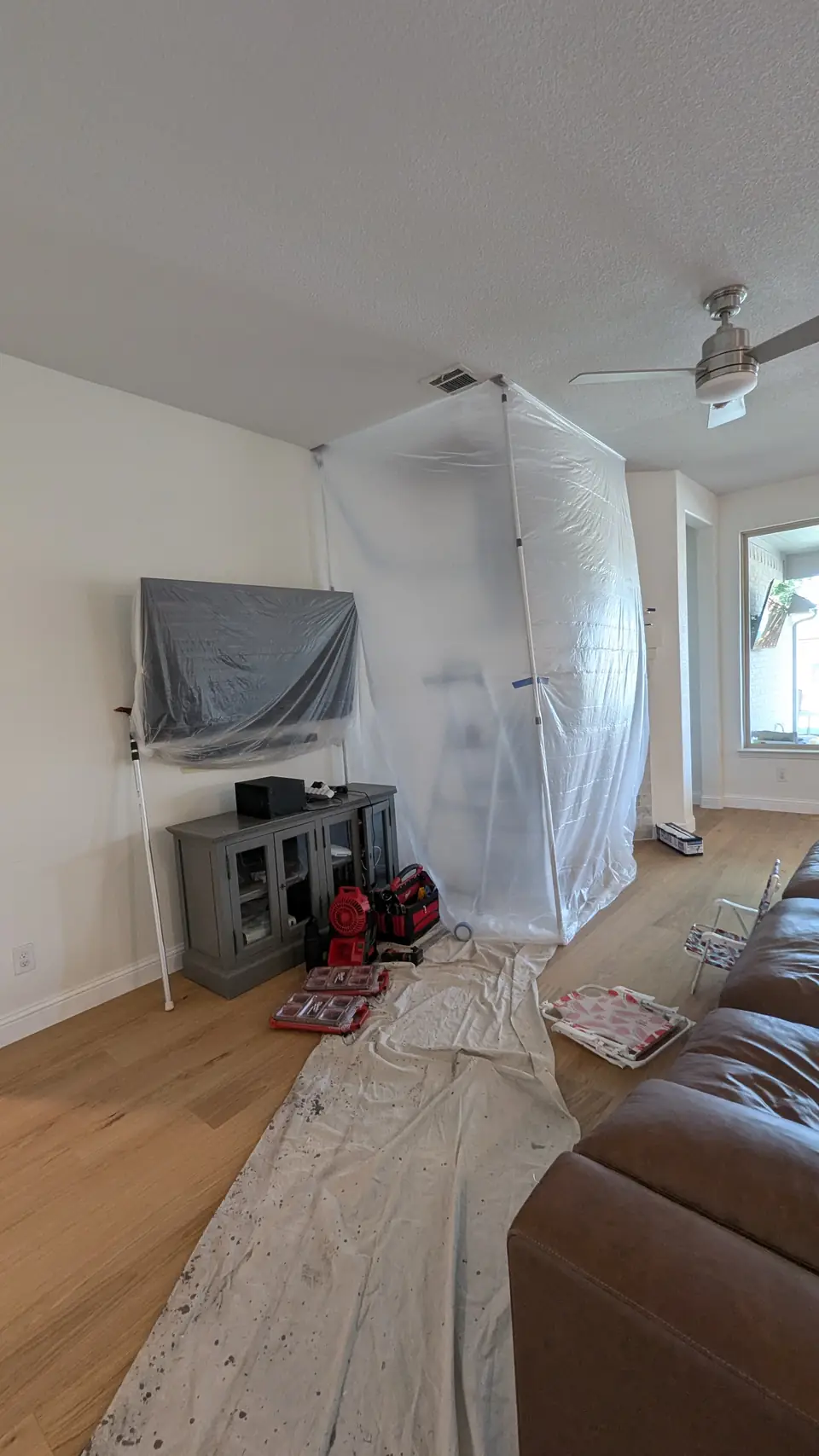
- Ceiling work belongs inside plastic containment with floors and vents covered.
In this guide
Start with why the hole is there
Ceiling holes come from a short list of causes, and each one leads to a different first step. A plumber may have cut an access hole to reach a leak. Wet drywall may have softened and sagged. Someone may have stepped off a joist in the attic. An old smoke detector, fixture or vent may have been removed. A nail may have pushed through the surface. Pests sometimes leave holes too.
If the cause is finished and the area is dry, the repair is straightforward. If you do not know the cause, that is the first thing to find out.
If a plumber or air conditioning technician opened the ceiling, ask before they leave whether their repair is complete and whether anything above needs to stay reachable, such as a shutoff valve or a drain cleanout. If it does, a neat removable access panel may serve you better than a permanent patch.
Water stain? Stop the water first
A brown ring or a soft, sagging spot means water got into the drywall. Common sources are a bathroom above (tub drain, toilet seal or shower pan), an air conditioning unit in the attic whose condensate line or drain pan has clogged or overflowed, a water heater in the attic, or the roof. Notice when the stain grows: after showers points to plumbing, after rain points to the roof, and during hot weather with the AC running points to the condensate line.
Once the source is fixed, let the area dry completely. Drywall that is soft, crumbly or sagging gets cut out and replaced, not painted. Firm, dry drywall with only a stain needs a stain-blocking primer before paint, or the stain will show through again. A leak inside a wall or under a floor is a job for a licensed plumber, and a large area with a musty smell may need a mold specialist.
- Is the stain damp or soft to the touch?
- Is it getting bigger?
- Does it change after showers, rain or AC use?
- What sits directly above it: a bathroom, the attic AC, the roof?
Texture is what people notice
Ceilings are rarely flat paint on smooth drywall. Many have orange peel, knockdown or popcorn texture, and a smooth patch in a textured ceiling shows from across the room. Texture is matched by building it up in layers, sprayed or applied by hand, and checking it in the light from the nearest window, which catches every ridge.
Paint is the second half. Ceiling paint changes color with age, so fresh paint on a small patch can show as a brighter square. Often the cleanest result is repainting the ceiling from edge to edge, or at least to a natural break such as a beam or a change in ceiling height.
One caution for older homes: popcorn texture applied before the 1980s may contain asbestos. Have a sample tested before anyone sands, scrapes or cuts into it.
Hole or damage in your ceiling? Tell Daniel about it
Keeping the dust where it belongs
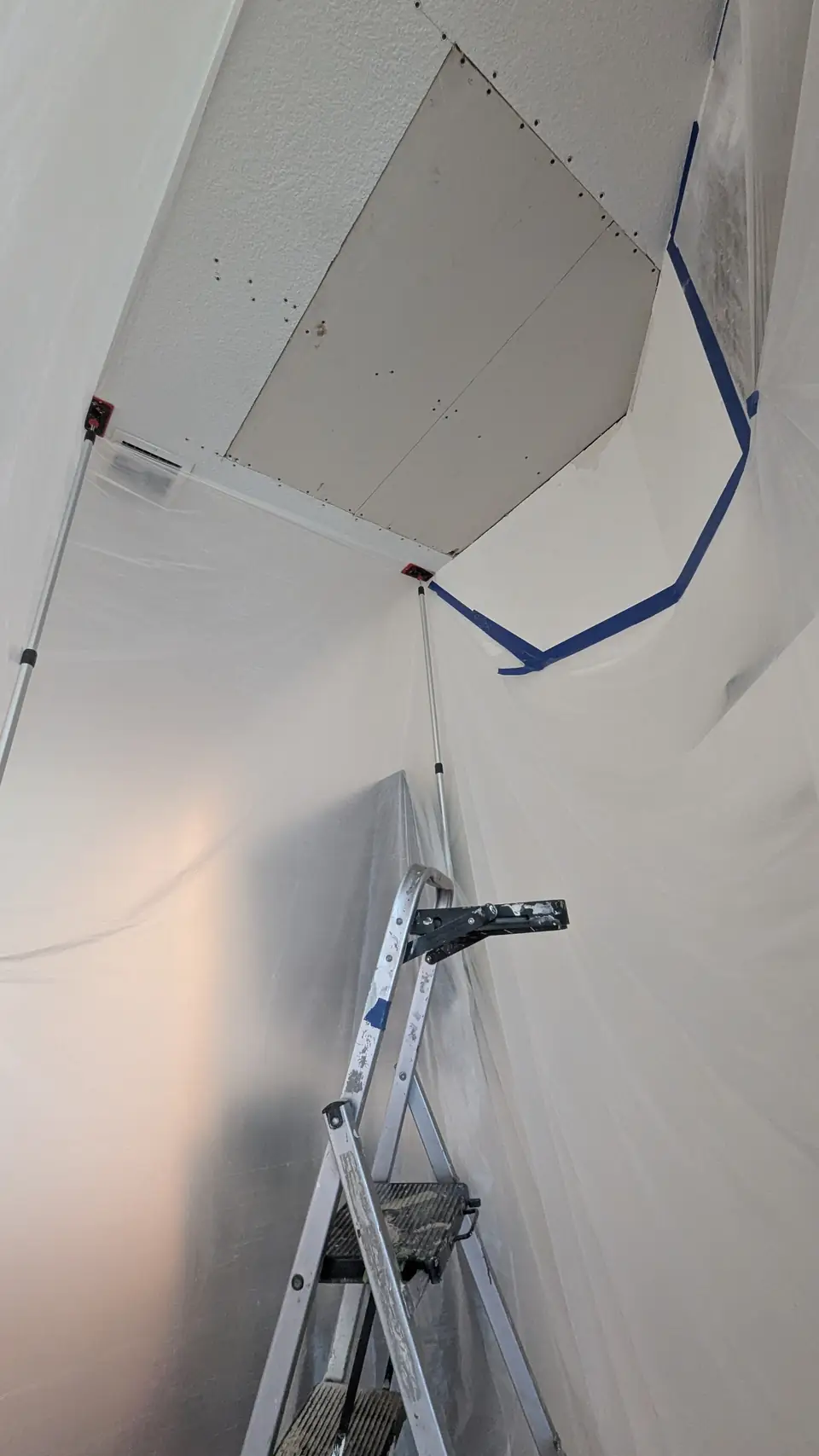
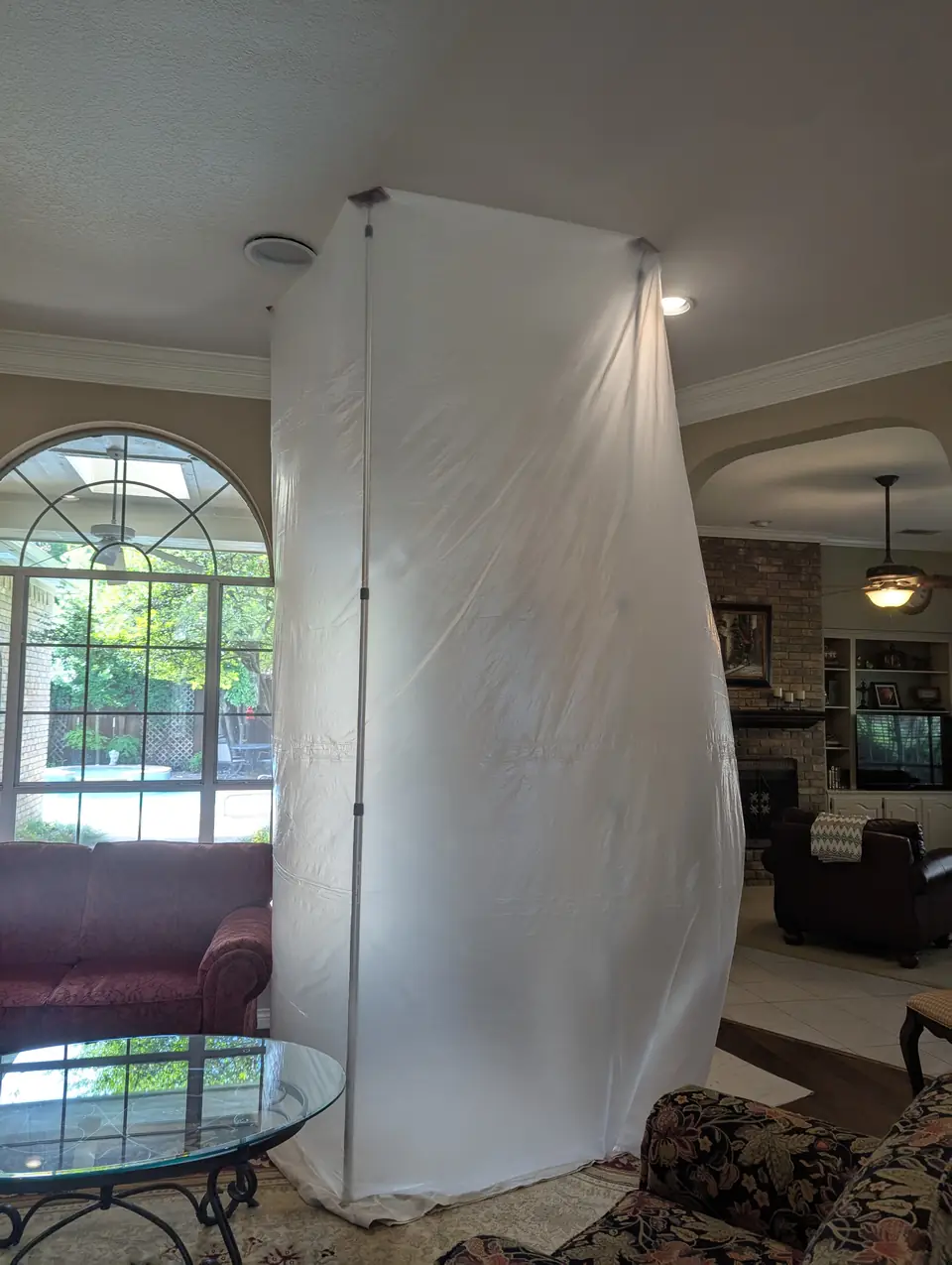
Ceiling work drops dust straight down, and sanding joint compound makes a fine powder that drifts. The careful way to do it is a plastic containment wall around the work area, floor runners and drop cloths, furniture moved or covered, and the air conditioning turned off for the sanding so the return does not pull dust through the house. A shop vacuum at the end, not a broom, picks up what settles.
Ask anyone you hire how they handle dust. If the answer is a single drop cloth, expect to clean the room afterward.
What a finished repair looks like
Daniel's own project photos include a ceiling drywall repair done inside a plastic containment wall; that is the standard to expect.
- The patch is backed by framing or backer strips, so it does not flex or crack later.
- No ridge or edge shows when you look across the ceiling toward a window.
- The texture pattern blends into the surrounding ceiling.
- The paint matches in color and sheen from where you normally stand.
- The room is left as clean as it was found.
What to send
Send The DFW Handyman two photos, one close and one wide, taken with the room lights on, plus a note on what is above the ceiling and whether any leak has been fixed, through request service. See drywall repair for the kinds of wall and ceiling work Daniel takes on, all backed by our one-year warranty on workmanship.