Key takeaways
- Scratches in painted wood can be filled, sanded and repainted; chewed profiles are usually replaced and matched.
- Stained wood is harder to repair invisibly than painted wood, so expect a blend rather than a perfect match.
- Urine that has soaked into wood flooring or the subfloor rarely sands out.
- Protect the spot after the repair, such as with a door guard, a kick plate or a gate, so the damage doesn’t come back.
- Pet damage tends to be small and spread around the house; put it all on one list.
In this guide
Doors and door casing
Dogs scratch the doors they want through: the back door, the bedroom door, the laundry room. On a painted interior door, shallow scratches are filled, sanded smooth, primed and repainted. Deep gouges in a solid door can be filled the same way with a harder filler. A hollow-core door whose thin face has been torn through usually can’t be patched well, and a new slab fitted to the old hinges is the cleaner fix; door replacement and installation covers that.
Exterior doors need more care, because scratched finish lets water into the wood. A badly scratched front or back door may need a full refinish, like Daniel’s front door refinish, done with the entry masked and the floor covered. Once the door is repaired, a clear scratch guard or a metal kick plate on the lower part of the door keeps it that way. The casing around the door often takes damage too, and it is repaired or replaced along with the door.
Baseboard, trim and window sills
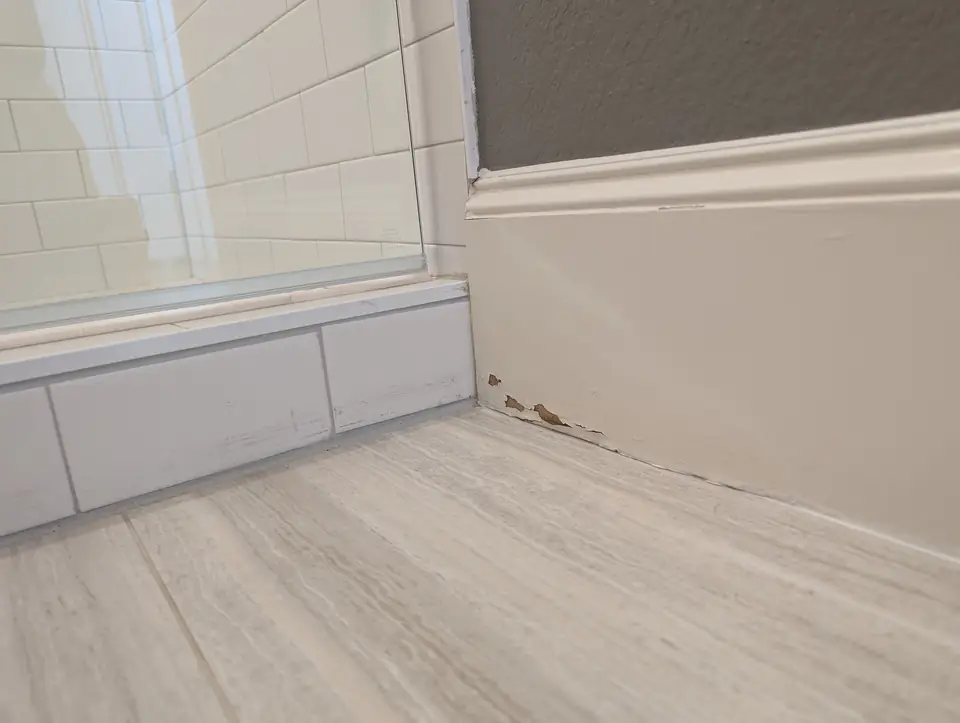
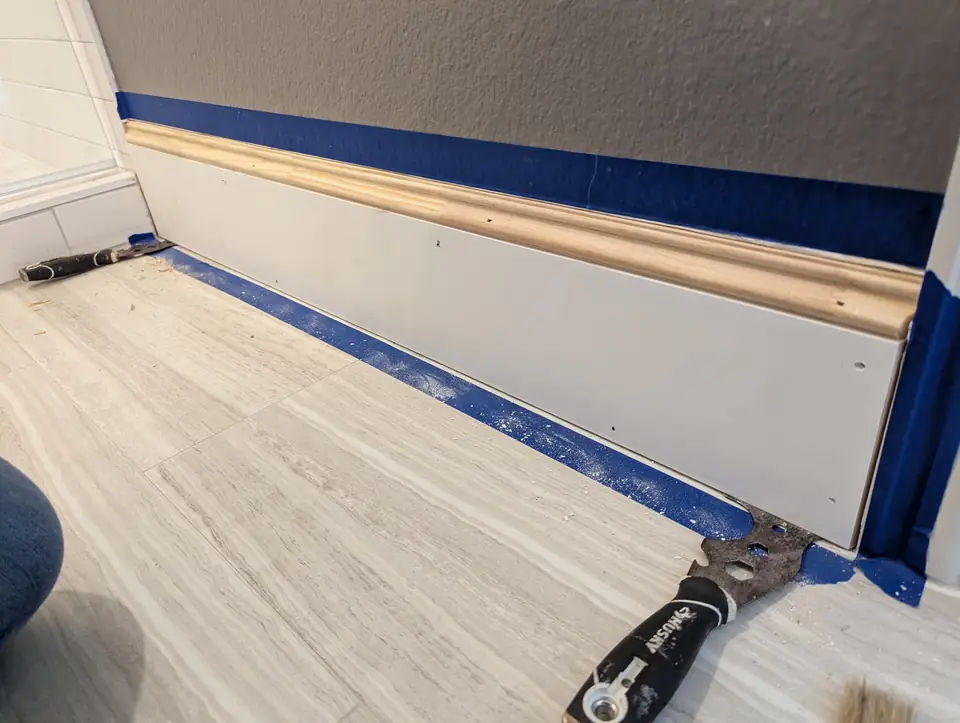
Puppies chew corners: the end of a baseboard, an outside corner of casing, the edge of a stair. Light chewing on painted trim can be filled and sanded back to its profile. Deeper damage is better cut out and replaced with a matching piece, fitted tight, caulked and painted, much like Daniel’s baseboard install.
Common trim profiles are easy to match. Older homes often have profiles that are no longer sold, and those may need to be made or pieced together; trim, moulding and wall paneling explains the options. Window sills take a beating from dogs who watch the street, and a scratched sill can be repaired and repainted or, on a stained sill, sanded and refinished.
Drywall corners and walls
Chewed outside corners are among the most common pet repairs. The damaged corner bead, the metal or plastic edge inside the corner, is cut out and replaced, then finished, textured and painted so the corner is straight again. Scratched walls beside doors and crates are skimmed smooth and repainted. See drywall repair for this kind of work, and matching drywall texture for what makes a patch disappear.
Pets left their mark? Tell Daniel about it
Wood floors
Scratches that only mark the clear finish on a wood floor can often be blended or recoated. Gouges into the wood itself may need a board or two replaced, or a sand and refinish of the room.
Urine is harder. When it soaks into wood, it leaves dark stains that sanding rarely removes, and the odor can live in the subfloor below. The lasting repair is to replace the stained boards, seal the subfloor beneath with an odor-blocking primer, and weave new boards in to match. Carpet and pad damage is a flooring company’s job. Wood floor repair goes into board replacement in more detail.
Blinds, gates and fences
Chewed or bent blind slats can sometimes be replaced individually; otherwise the blind is replaced, and installing blinds, shades and curtain rods covers fitting the new one. Outside, a gate that doesn’t latch reliably is an escape route. Sagging gates usually come back to the hinge post or the hardware, as why wood fence gates sag explains, and a dog that digs under the fence line may need a board or barrier along the bottom. See fence and gate repair.
Inside, a pet gate at the top of a staircase should be the kind fastened to the wall or framing, not a pressure gate that can be pushed loose. Babyproofing a home covers mounting gates safely.
Before moving out, selling, or renting
Pet repairs often come up at a move. If the pet is still in the house, plan the repairs for after it has moved out, or protect the repaired areas, so the work isn’t undone before the walk-through. Seal any odor-affected wood with a stain- and odor-blocking primer before paint. Repairs before selling or moving and rental make-ready repairs help you decide what to fix and in what order.
Getting it done
Walk the house once and photograph every spot: doors, trim, corners, sills, floors, blinds and gates. Put them on one list so they can be handled in as few visits as possible. Send it through Request service. We’ll tell you what can be repaired and what should be replaced, and all of it is backed by our one-year warranty on workmanship.