
Key takeaways
- Check the hinge post, the hinges and the gate frame, in that order, to find why the gate sags.
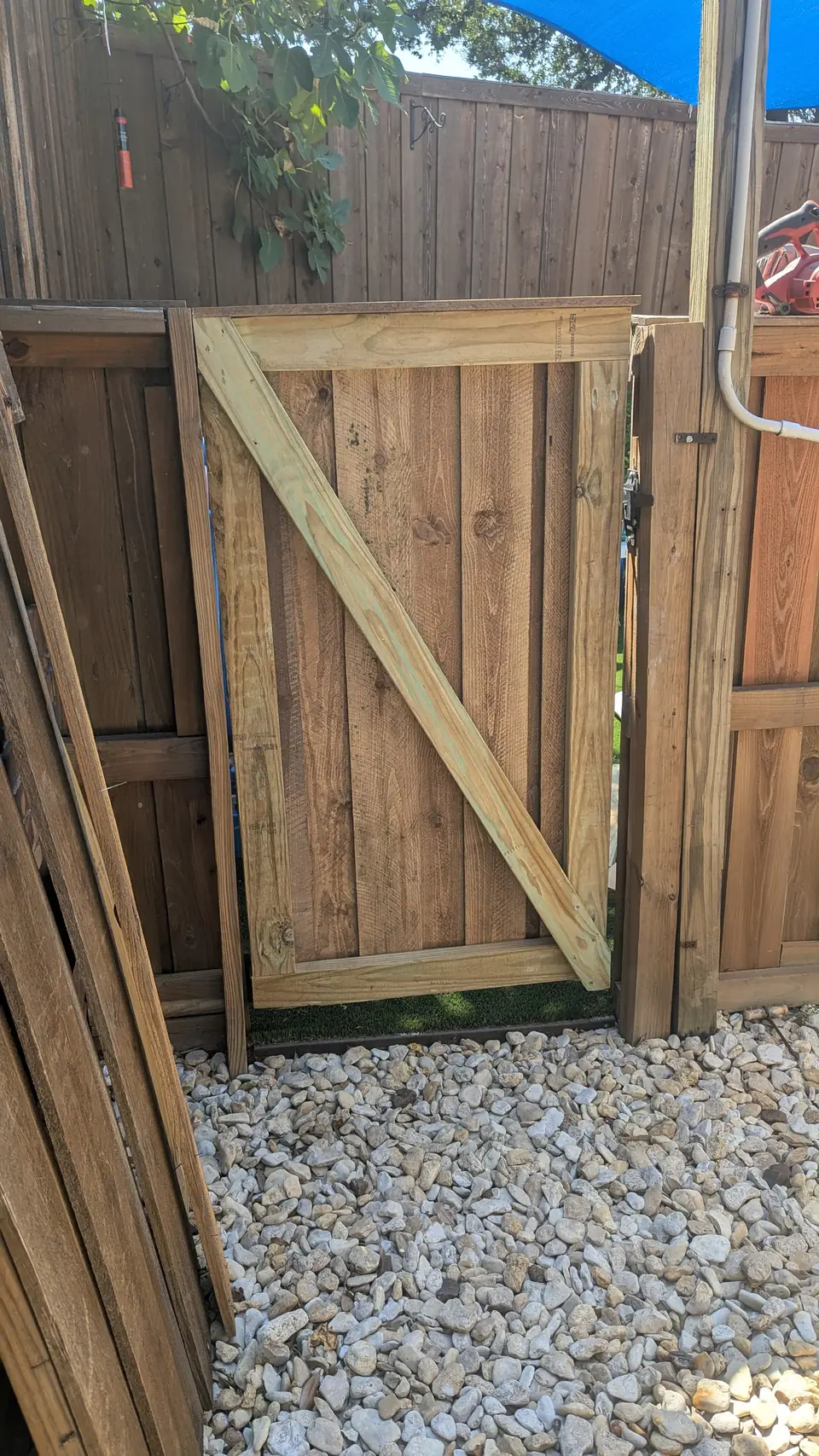
- A diagonal brace only works when it runs from the bottom hinge corner up to the top latch corner.
- A leaning or rotted hinge post must be reset or replaced; adjusting the latch only hides the problem.
- Heavy or wide gates often last longer with a steel hinge post or a double-gate layout.
In this guide
Find the cause first
A sagging gate shows the same symptoms no matter the cause: the latch side drops, the latch stops catching, and the bottom starts to drag. The fix depends on which part has moved, so a few quick checks save a wasted repair.
- Hold a level against the hinge post. If it leans toward the opening, the post is the problem.
- Push the hinge post by hand. Any movement at the ground means the footing has loosened or the post has rotted.
- Wiggle each hinge. Play at the screws means they have stripped out of the wood.
- Lift the latch side of the gate. If the gate squares up and the latch lines up, the hinges or the frame are at fault.
- Look at the gate's corners. Open joints or a diamond shape mean the frame has racked.
A leaning or rotting hinge post
The hinge post carries the whole weight of the gate, and that weight is always pulling it toward the opening. Wood posts set in concrete also tend to rot right at the ground line, where water collects between the wood and the concrete.
North Texas clay soil adds another force. It swells when wet and shrinks when dry, and that movement loosens posts season after season. A post that leans only slightly at the bottom becomes a noticeable drop at the latch.
The lasting fix is to reset the post with a new footing, or to replace it. For heavy gates, a steel hinge post is a common upgrade: it does not rot, holds its shape, and can be faced with wood so it matches the fence. If the fence is shared, talk with your neighbor before a post comes out.
Loose hinges and worn hardware
Hinges loosen when screws are too short, go into end grain, or strip out as the wood dries and swells. Light-duty hinges that came with a pre-built gate are often undersized for the gate's weight.
The fix is stronger fastening and stronger hardware: longer structural screws into solid wood, through-bolts with washers on heavy gates, and hinges rated for the gate's width and weight. A third hinge on a tall gate spreads the load. Self-closing hinges need adjusting after the gate is straightened.
Gate sagging or dragging? Tell Daniel about it
A frame that has racked
Over time, a gate's frame can shift out of square. Joints open, pickets loosen, and the whole gate becomes a parallelogram that drops at the latch side.
A wood diagonal brace keeps the frame square, but only if it runs in the right direction: from the bottom corner on the hinge side up to the top corner on the latch side. In that position, it pushes the latch side up. A brace installed the other way does almost nothing, and it is a common reason gates sag soon after they are built.
An anti-sag cable kit works the opposite way. A steel cable with a turnbuckle runs from the top hinge corner down to the bottom latch corner, and tightening the turnbuckle pulls the latch side back up. It is a good fix for a gate that is otherwise sound. Badly warped boards or a frame with rotted members usually means rebuilding the gate.
Latch problems and dragging
When a latch stops catching, it is tempting to move the latch down to meet the gate. That works for a while but leaves the gate sagging, and the latch drifts out of line again. Fix the sag first, then set the latch and add a gate stop so the gate closes to the same spot every time.
If your gate is part of a pool enclosure, self-closing and self-latching hardware may be required. Ask your city what applies before changing the hardware on a pool gate.
Repair or rebuild?
Repair makes sense when the frame is solid and most boards are sound. Rebuilding is the better choice when the frame has rot, many boards are broken or warped, or the gate is simply too wide and heavy for one leaf. A wide opening split into a double gate puts far less strain on each hinge post.
The DFW Handyman repairs and rebuilds wood fence gates, resets posts and replaces hardware, and welds metal gates too, so one visit can cover both. See fence and gate repair, or send photos of the gate, the hinge post and the latch through the service request.