Key takeaways
- Probe the soft spot with an awl or small screwdriver: how deep it goes decides repair or replacement.
- Shallow, local rot can be cut out and rebuilt with epoxy or a spliced-in section of new wood.
- Rot through the full thickness of a jamb or sill, or into the framing, calls for replacing that part.
- Every repair fails again unless the water that caused it is stopped first.
In this guide
Where rot starts, and why
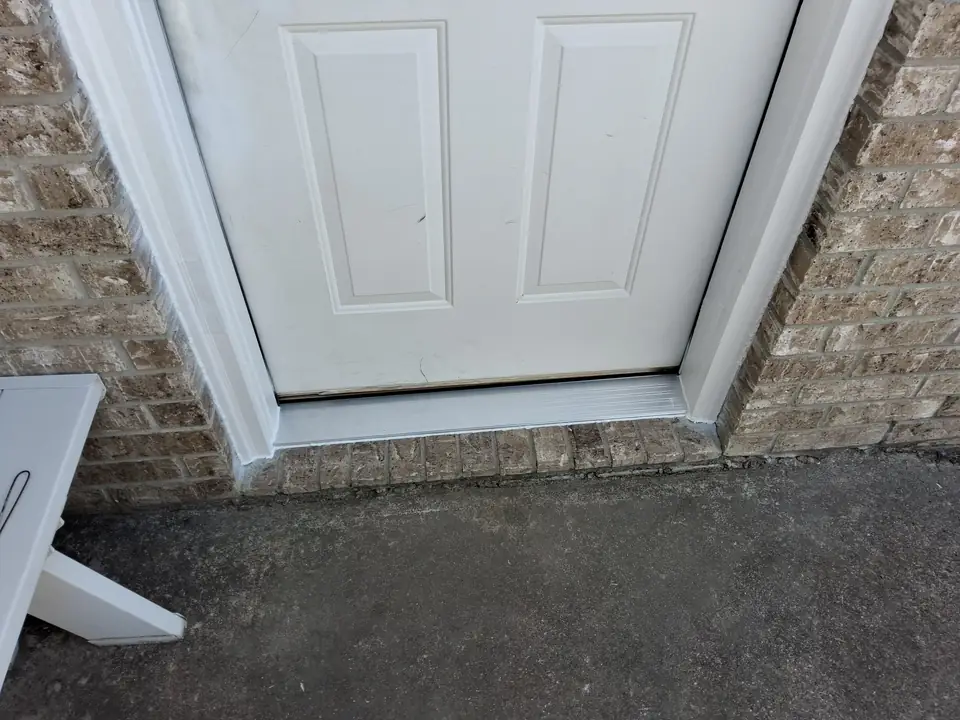
Wood rots where water sits and cannot dry out. Around a door, that is almost always the bottom of the jambs and the brick molding, where they meet the threshold or the porch. On a window, it is the sill and the lower corners of the trim, because a sill is a flat surface that catches every rain.
End grain is the weak point. The cut ends of boards soak up water like a straw, so joints and corners rot long before the face of a board does. Once paint or caulk cracks at those joints, water gets in and stays.
- Caulk that has shrunk, cracked or pulled away at trim joints
- Paint that has peeled and left bare wood exposed
- Sprinkler heads that spray the wall, the door or the window every morning
- A missing or failed drip cap or flashing above the door or window
- Wood that touches concrete, soil or mulch
- Gutters that overflow onto a doorway or a window below
How to check how deep it goes
Press an awl or a small screwdriver into the suspect spot and into the wood around it. Sound wood resists and leaves a small dent. Rotted wood feels spongy, lets the tip sink in easily, or breaks away in soft, stringy or cube-shaped pieces. Work outward until the tip stops sinking in. That outline is the real size of the problem, and it is often larger than the paint suggests.
Look at the inside of the house too. A water stain on the interior trim, a swollen baseboard next to an exterior door, or a soft or discolored floor at the threshold means water has traveled past the trim. Bubbling paint, gaps that keep opening, and a door that has started to stick are other signs.
You do not need to dig the wood out yourself. Mark the spots, take close-up photos and a wider shot of the whole door or window, and you have what a carpenter needs to tell you which way it will go.
When a repair is enough
A repair makes sense when the rot is shallow, limited to one area, and the structural part of the jamb, sill or trim is still solid. In that case there is no reason to pull a good door or window out.
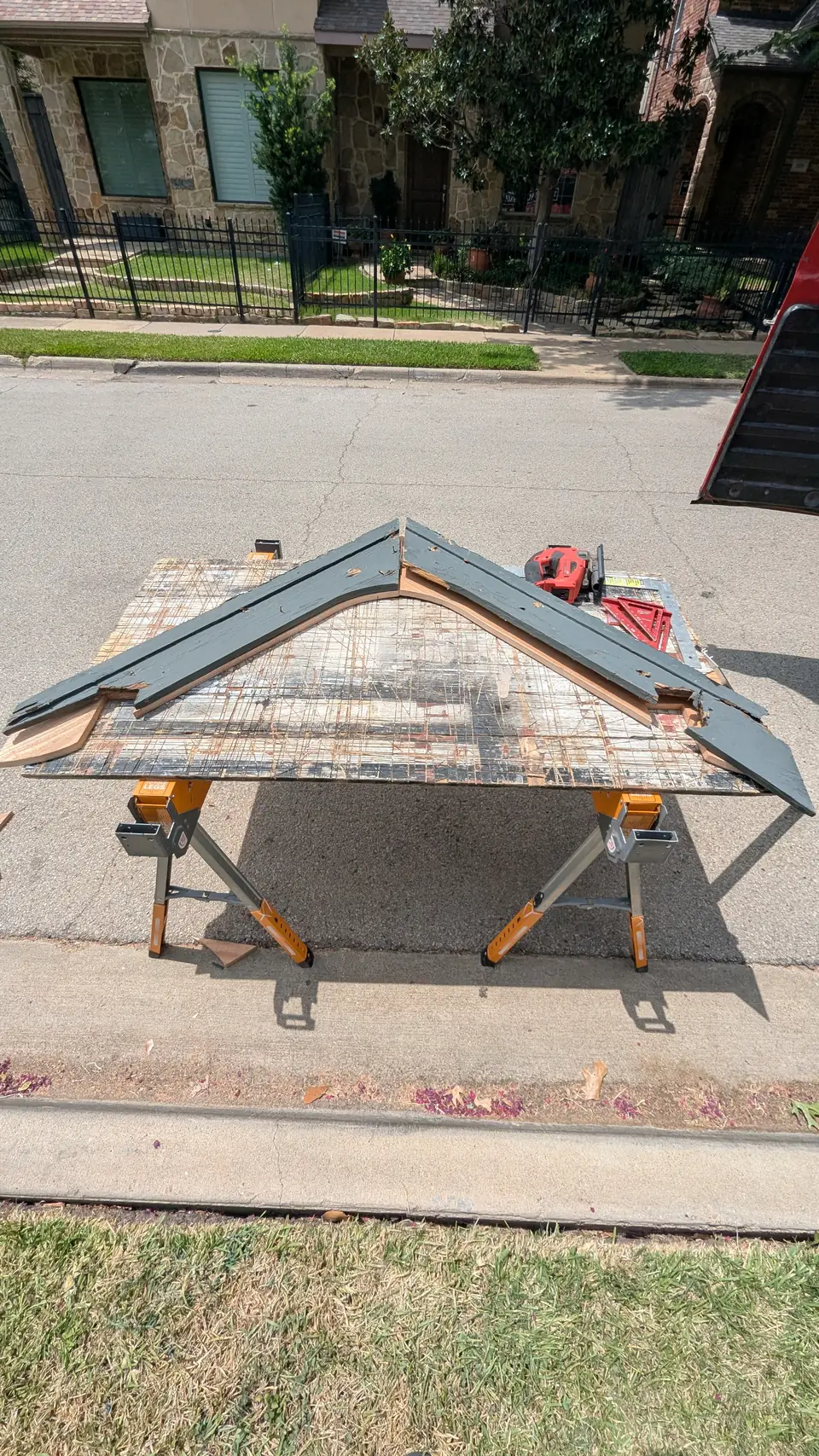
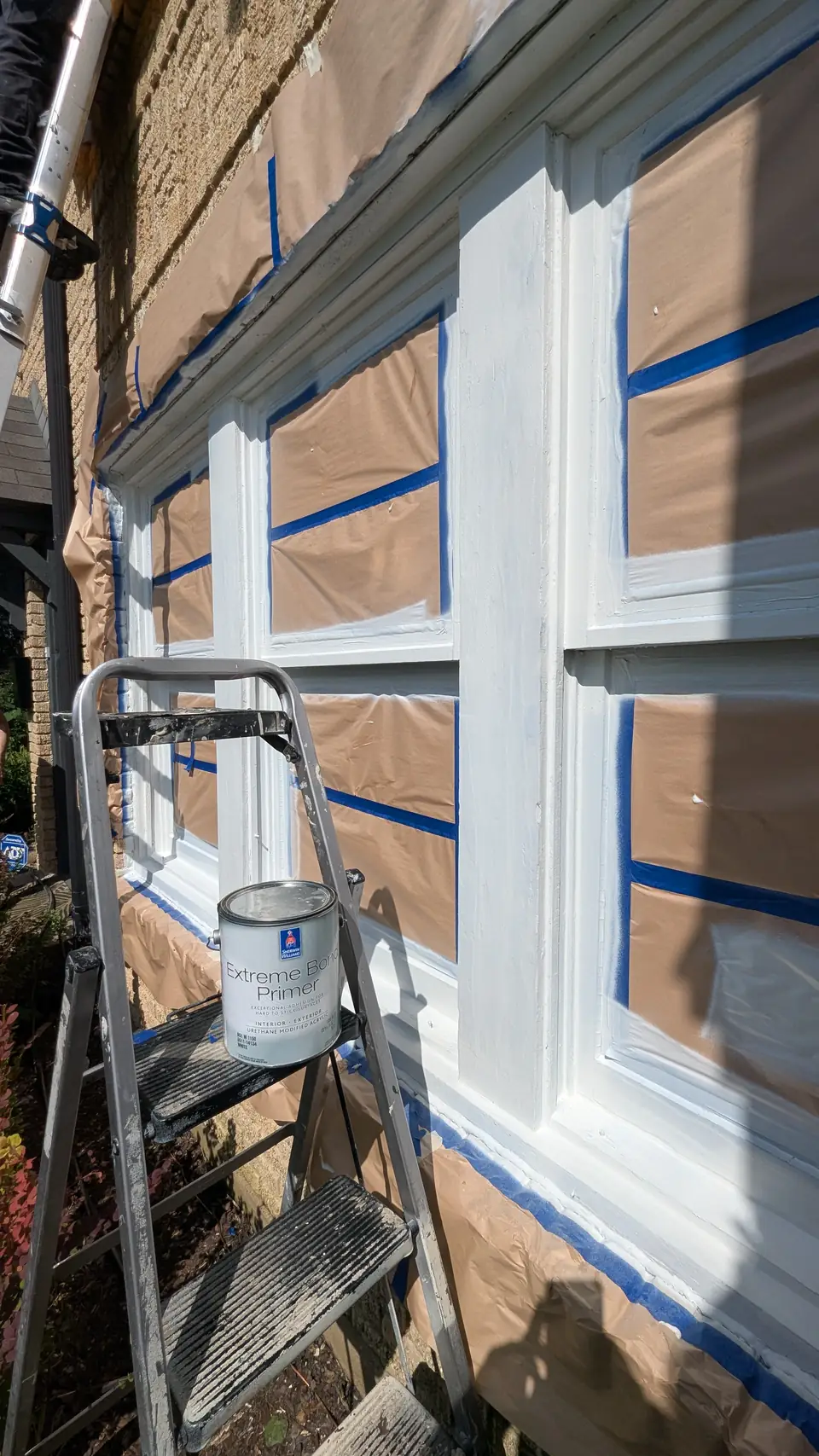
There are two common methods. For small areas, the rotted wood is removed down to sound wood, the area is treated with an epoxy consolidant, rebuilt with an exterior epoxy filler, shaped to the original profile, then primed and painted. For larger damage, the bad section is cut out and a new piece of wood is spliced in. On door jambs, that usually means replacing the bottom of the jamb and brick molding, with the joint placed where it sheds water. Rot-resistant material and priming all sides, including the cut ends, help the new piece last.
A section repair keeps the original door, its hardware and its alignment, which matters on older homes and on entry doors with custom hardware.
Found soft wood around a door or window? Tell Daniel about it
When replacement is the better call
Replacement is the honest answer when the rot is no longer local. What drives the difference in cost between repair and replacement is the extent of the damage, whether the door and hardware can be reused, how much trim must be matched, and what turns up once the old wood is opened.
- Rot runs through the full thickness of the sill or jamb
- Several sides of the frame are soft, not just one corner
- The framing, subfloor or sheathing behind the trim is soft or stained
- The door itself is rotting at the bottom rail or coming apart
- The window sash, not just the trim, is rotted
- The same spot has been patched before and failed again
Stop the water, or the rot comes back
Fixing the wood without fixing the water only resets the clock. Before or during the repair, deal with the source.
- Seal trim joints with a quality exterior sealant and keep paint intact on every face
- Turn sprinkler heads away from walls, doors and windows
- Add or repair drip caps and flashing above openings
- Keep soil and mulch below the bottom of the trim
- Clean gutters and make sure they do not overflow onto the entry
- Replace worn door sweeps and threshold seals so rain does not run inside
Getting it repaired
Send photos of both sides of the door or window, with close-ups of the soft areas. Expect the carpenter to tell you if the damage might be larger than it looks. A good repair plan includes a conversation before the scope changes, not a surprise afterward.
The DFW Handyman repairs rotted door jambs, thresholds, window sills and exterior trim, and rebuilds trim to match the original profile. See siding and exterior repair and door repair, or describe your door or window in the service request.