Key takeaways
- Walk the house at crawling height first. It shows you what actually needs doing.
- The top of the stairs needs a hardware-mounted gate, screwed into solid wood or framing. Pressure gates belong elsewhere.
- An old wooden banister can carry a gate if it is solid; adapters can avoid drilling into original wood.
- Cabinet latches only work if they are matched to the cabinet and screwed in, not just stuck on.
- Tall furniture and TVs need anchors as much as stairs need gates.
In this guide
Walk the house at crawling height
Get down on the floor and move through each room the way a crawling baby or a toddler would. You will notice things you never see standing up: low cabinets with cleaning products, cords hanging from blinds, outlets behind the sofa, the corner of a stone hearth, a bookcase that rocks when you pull on a shelf.
Write each item down by room. That list is what a babyproofing visit works from, and it keeps the job from turning into a cart full of products you don’t need.
Stair gates: the top and the bottom are different jobs
There are two kinds of gates. A pressure-mounted gate wedges between two surfaces and can be moved without tools. A hardware-mounted gate is screwed to the wall, a post or the framing, and swings open on hinges.
At the top of the stairs, use a hardware-mounted gate. Most gate makers say so in their instructions, for good reason: a pressure gate can be pushed out, and its bottom bar is a tripping hazard right where a fall is worst. The gate should swing away from the stairs, never out over them.
- Fasten into a stud, a solid post or blocking, not drywall anchors alone. A child leaning or shaking the gate puts real force on those screws.
- Check the opening width and whether the walls are square to each other; angled or very wide openings need extension pieces or a gate designed for them.
- At the bottom of the stairs, a pressure gate may be acceptable for that location; follow the gate’s own instructions.
- Make sure adults can open it one-handed while carrying a baby, or it will end up propped open.
Is it safe to mount a baby gate to an old wooden banister?
It can be, if the banister itself is solid and the gate is mounted to suit it. Start by checking the stair: grab the newel post and the handrail and push. If anything moves, fix that first; a gate is only as strong as what it is fastened to. Stair and handrail repair covers tightening loose posts and balusters.
Turned and round newel posts don’t give the gate hardware a flat surface. Banister adapter kits solve this by strapping or clamping around the post, giving the gate something flat to mount to, without screws going into the original wood. On a painted banister, drilling directly into the solid newel post is also an option, and the holes fill and paint over neatly later. On original stained wood, holes are much harder to hide, which is a good reason to use an adapter.
Never hang a gate from a single thin baluster; an old one can snap out of the rail. In older Dallas houses with original stairs, it is worth having someone look before choosing the gate; reliable help for an older Dallas home has more on caring for original details.
Getting ready for a crawler? Tell Daniel about it
Kitchen cabinets and drawers
Not every cabinet needs a latch. Focus on the ones that hold cleaning products, knives, medicine, the trash, small appliances with blades, and anything breakable. Then choose the type of latch for each cabinet:
- Spring latches screw to the inside of the door and the cabinet frame, and release when an adult presses a tab. They are inexpensive and reliable when fastened properly.
- Magnetic locks are invisible from outside and open only with a magnetic key held against the door. They need the right door thickness and a solid inside surface to mount to.
- Sliding locks that loop through two knobs or handles need no drilling, but a determined toddler can sometimes work them loose.
- Adhesive-mounted latches are easy to install and easy to pull off. On a cabinet that is used many times a day, screws hold far better.
- Appliance straps for the oven, refrigerator or dishwasher, and a stove knob cover if the knobs are within reach.
Latches throughout the house
Once the kitchen is done, the same thinking applies everywhere else: bathroom vanities, the laundry room, the garage cabinet, a media console with glass doors.
Other items that often belong on the same visit: toilet lid locks, doorknob covers or lever locks on rooms you want kept closed, a high latch on the door to the garage, finger-pinch guards on doors, locks on sliding doors, and soft corner guards on hearths and tables. Window blinds with looped cords should be replaced with cordless ones or have the cords secured well out of reach; installing blinds, shades and curtain rods covers the options.
Furniture, TVs and outlets
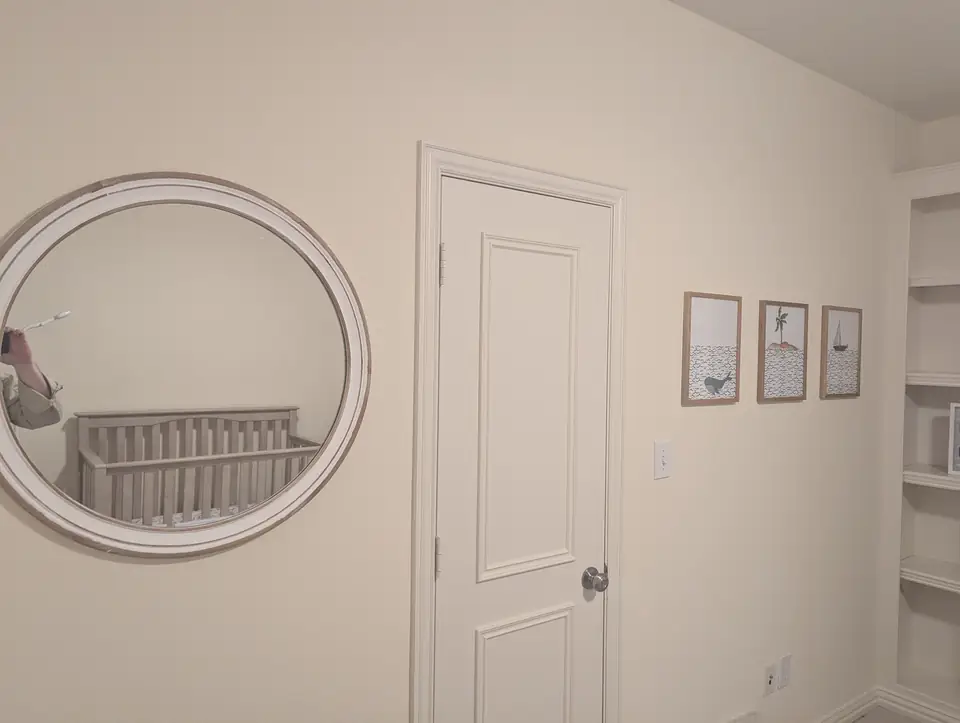
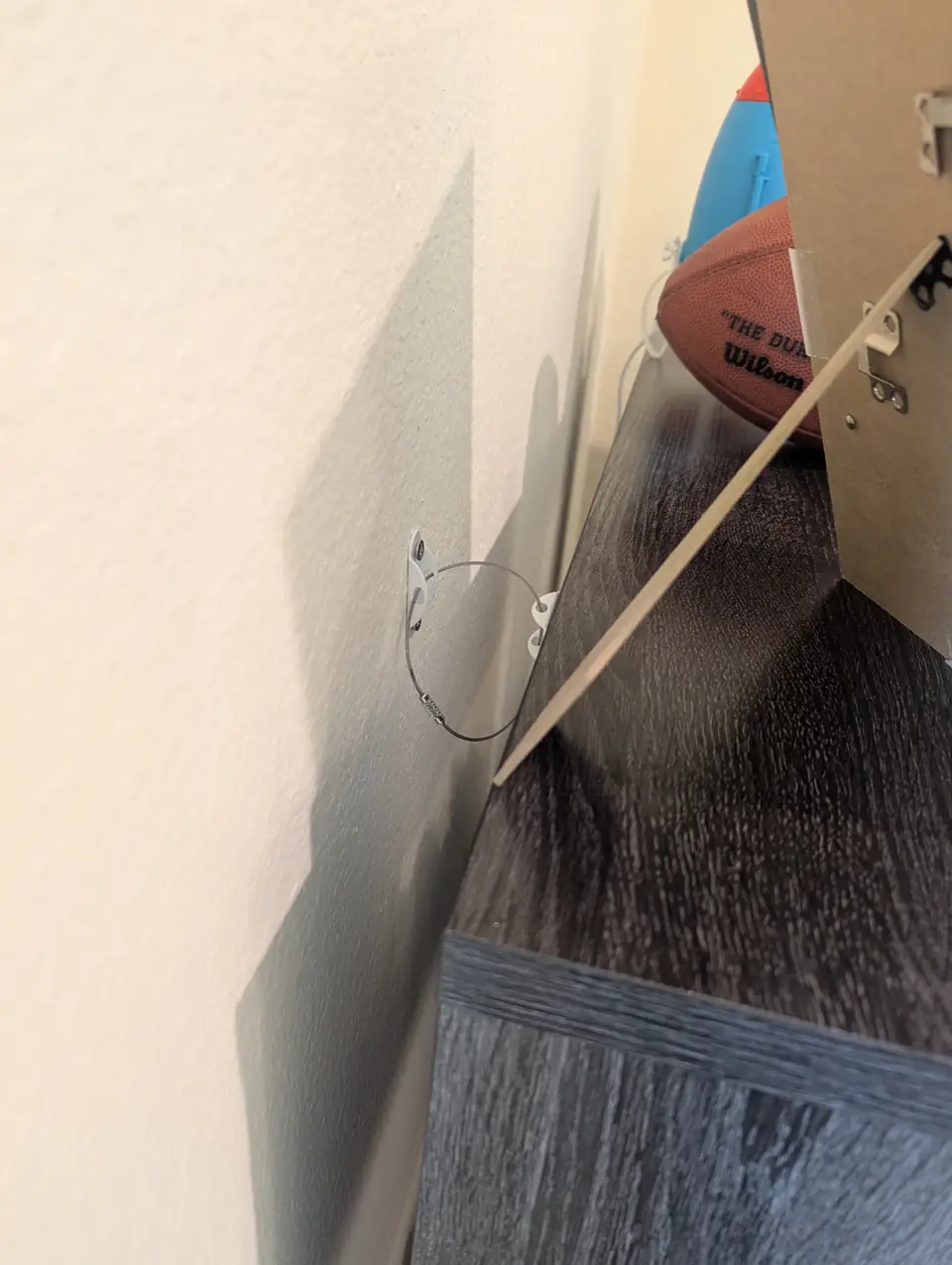
Every dresser, bookcase, wardrobe and tall cabinet should be anchored to the wall, because a climbing child can pull one over. Daniel’s furniture anti-tip anchoring project shows metal anchors fastened between each tall piece and the wall in a nursery and a family room. Furniture assembly and anti-tip anchoring explains how anchors are chosen and where they go.
A TV on a stand should be strapped down or moved to a wall mount; how to mount a TV on drywall, brick or stone covers the wall side of that. Art or a mirror over a crib needs hardware rated well above its weight, or a different spot.
Plug-in outlet covers and sliding cover plates need no tools. Replacing standard outlets with tamper-resistant ones is electrical work, which Texas licenses, even at an existing box: ask who will do it and whether they are licensed. We’ll tell you how we handle it on your job.
Do it in one pass, then check it
Babyproofing goes fastest when it is one visit from your crawling-height list. Buy the gates and latches you want ahead of time, or send the list and ask for advice on types first. Gates and latches loosen with use, so test them now and then and tighten anything that has started to move.
When the child outgrows them, the gates and latches come off and leave screw holes. Those patch and touch up easily; see drywall repair. To get a babyproofing visit on the calendar, send your list through Request service.