
Key takeaways
- Treat a loose handrail or a broken nosing as a safety repair, not a cosmetic one.
- Risers can usually be repaired or replaced one at a time.
- A nosing that is a separate piece can be replaced by itself; otherwise the tread is repaired or replaced.
- Stained stairs are harder to match than painted ones, so test samples come first.
- Cracked stringers or stairs pulling away from the wall are structural: have them looked at before any cosmetic work.
In this guide
How a wood staircase is put together
Knowing the parts makes the repair conversation easier. The stringers are the sloped boards underneath that carry everything. The treads are the parts you step on, and the risers are the vertical boards between them. The nosing is the front edge of each tread that overhangs the riser; on some stairs it is part of the tread, on others a separate strip, and on an open side it wraps around the end as a return nosing. The handrail sits on balusters and newel posts, or on brackets along the wall.
One more detail matters: whether you can get under the stairs. An open underside or a closet beneath gives access to the back of the treads and risers. A finished drywall ceiling under the stairs means most work happens from the front.
Damaged stair risers
Risers take kicks from shoes and bumps from vacuums all day. Most damage falls into a few kinds:
- Scuffs and dents on painted risers. Filled, sanded and repainted, with the treads masked off.
- A cracked or split riser. Risers are often thin boards, and a split one is replaced: the old board comes out, a new one is cut to fit, then glued, fastened and finished.
- A gap between riser and tread. Often the cause of a squeak. The joint is closed up and refastened, from below where there is access.
- Water damage on the bottom risers, usually from mopping or a nearby leak. The source is dealt with first, then the damaged board is replaced.
Chipped, split or worn stair nosing
The nosing takes more wear than any other part of a staircase, and a broken one is a trip hazard, so fix it promptly. A small chip on a painted stair can be filled with a hard wood filler or epoxy, shaped to the rounded profile and painted. A split or broken section is cut back to sound wood and a new piece is spliced in with the same profile.
If the nosing is a separate strip, that strip is replaced. If it is part of a one-piece tread, the tread is replaced, matched for wood species, thickness and edge shape. On stained stairs the new wood has to be stained to match boards that have aged for years, which takes samples. Stairs and floors are often finished together; wood floor repair covers matching the finish.
Stairs or a handrail need repair? Tell Daniel about it
Loose treads and squeaks
A tread that moves or squeaks usually has glue or fasteners that have let go. Where the underside is open, it is secured to the stringers from below. Where it isn’t, it is fastened from above with countersunk screws, and the holes are plugged or filled to disappear. Our carpentry page covers this alongside the rest of our stair work.
Handrails, balusters and newel posts
A wobbly rail is usually one of three things: wall brackets screwed into drywall rather than studs, a newel post whose bolted connection has loosened, or balusters that have worked loose in their holes. Each gets anchored back into solid framing or reglued and refastened. A cracked or broken rail can be rebuilt or replaced. If yours moves when you lean on it, stop relying on it until it is fixed.
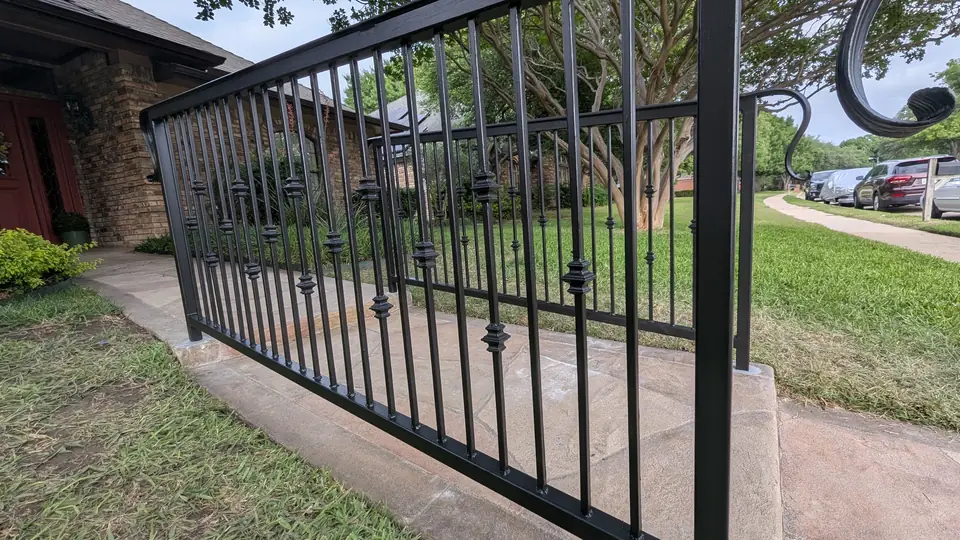
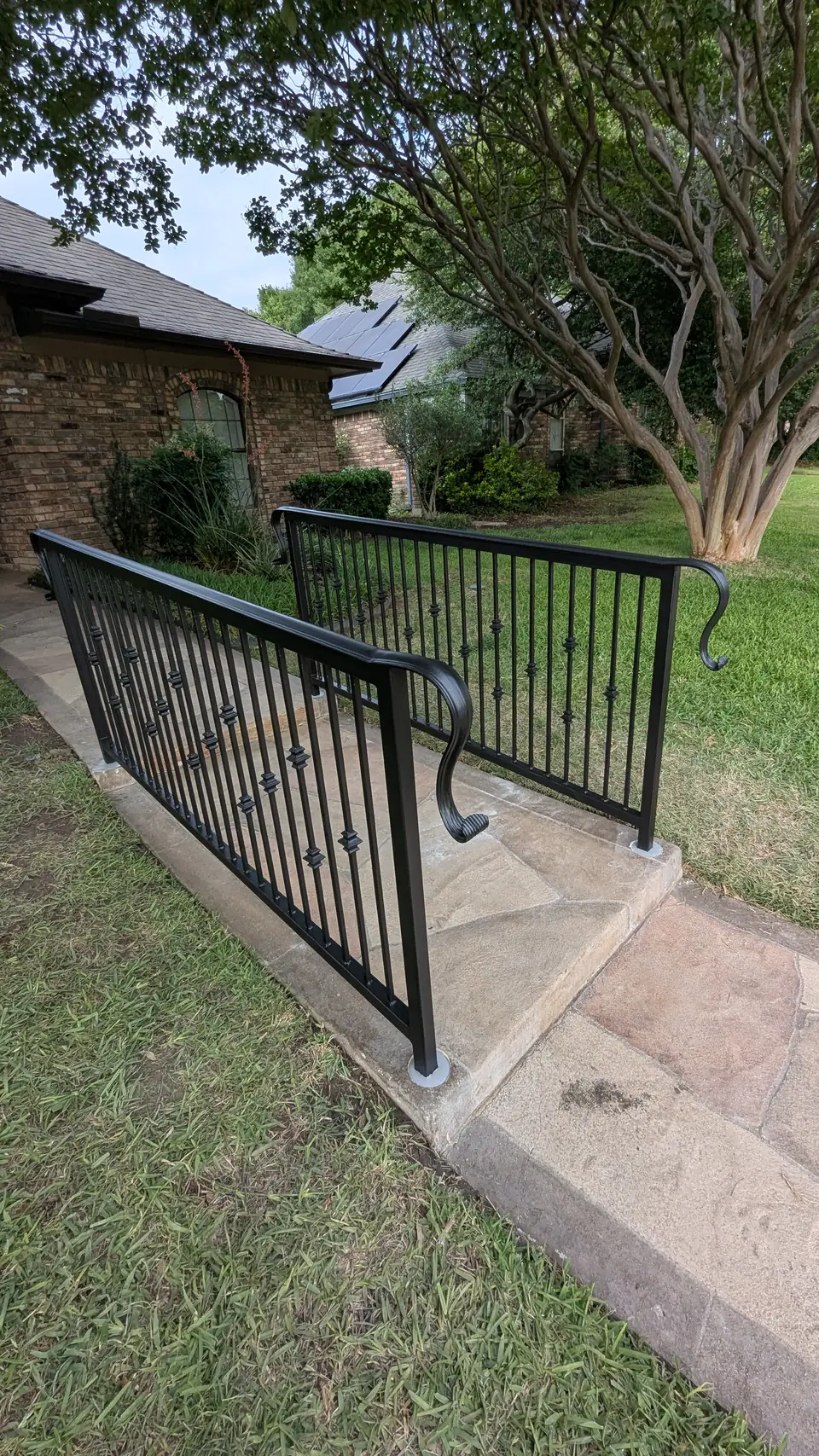
Building codes set the height and grip size for handrails. A rail in an older home may predate current rules, and a new or rebuilt rail should meet what your city requires today. For steps outside, steel is often the better material: Daniel’s front walk handrail was cut and welded on site along both sides of the walk. Wrought iron railings: repair or replace? covers metal rails, and our welding page shows what else we build in steel.
When it is more than a repair
Some signs point past carpentry repair: a cracked stringer, treads that sag in the middle, a staircase pulling away from the wall, or soft wood from water or insects. These need the stairs opened up and checked, and sometimes a contractor or an engineer before anyone patches the surface. We’ll tell you if that is where it leads.
Carpet removal brings its own surprise. Treads under carpet are often plain construction lumber, never meant to be seen, so turning carpeted stairs into wood stairs usually means new treads or tread caps rather than refinishing. Outdoor steps and deck stairs are covered in deck and outdoor stair repair.
What to send
Take a close photo of each damaged spot, one of the whole staircase from the bottom, and one of the underside if you can reach it. Say whether the stairs are painted, stained or carpeted, and whether the handrail moves. Send it all through Request service and we’ll tell you what it looks like.