Key takeaways
- A loose board is often a sign of what is under it. Check the joist before adding another nail.
- Screws hold better than nails that have already backed out once.
- A soft step, a spongy stringer or a wobbling handrail is a fall risk. Stop using it until it is fixed.
- Where the deck meets the house, and where posts meet the ground, are the places to check most carefully.
- Cleaning, sealing and keeping water moving off the wood slow down the next round of repairs.
In this guide
Why deck boards come loose
Deck boards are fastened to joists underneath. They loosen for a handful of reasons, and the reason decides the repair.
- Popped nails. Wood swells and shrinks with the weather, and over time nails work their way up.
- Corroded fasteners. Old fasteners rust, lose their grip or snap.
- A soft joist. If the joist under a board has started to rot, nothing will hold in it.
- A failing board. Boards split at the ends, cup, or rot from the top where water sits.
Fixing a loose deck board
If the board and joist are sound, the old fasteners come out and the board is refastened with exterior-rated deck screws into solid wood. Split, cupped or soft boards are replaced, cut so the joints land over a joist. A new board will look different from weathered ones until it ages or the deck is stained.
Before refastening, the joist under the board is probed with an awl or screwdriver. If it is soft, the problem is bigger than the board. A short soft spot can sometimes be repaired, but widespread soft joists, a sagging beam or posts rotting at the ground are structural. How to spot wood rot around doors and windows explains the probe test, and it works the same way on a deck.
Composite decking is repaired the same way in principle, but a replacement board has to match the original product and color, which can be hard on an older deck. Board and framing repairs like these are part of our carpentry work.
Backyard stairs: treads, stringers and handrails
Wooden steps from a deck or back door down to the yard take more water than any other part of a deck. The common problems are loose or cracked treads, rot where the stringers sit on the ground, and handrails that wobble because their posts have loosened.
- Treads. Loose treads are refastened; split or soft ones are replaced, keeping every step the same height.
- Stringers. On a short set of steps, a rotted stringer can often be replaced. The bottom ends rot first where they touch soil or a wet pad.
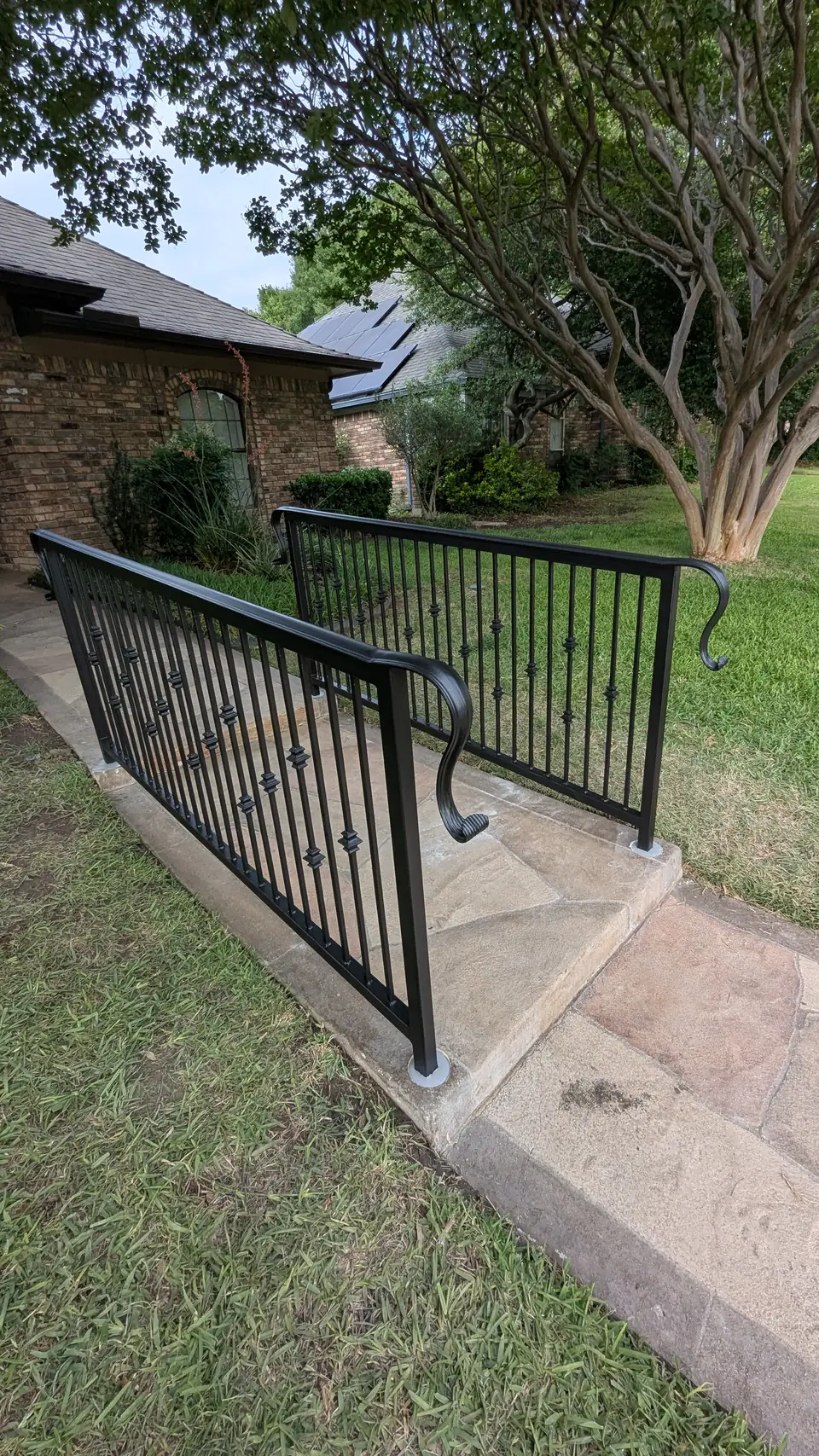
- Handrails and posts. A loose post is re-anchored or replaced. If the rail needs to be stronger, a welded steel handrail is an option, like Daniel’s front walk handrail.
- The landing. A pad or pavers that have sunk leave the bottom step taller than the rest, which trips people.
Loose boards or wobbly steps outside? Tell Daniel about it
Why uneven steps matter
Uneven step heights are a hazard, not a cosmetic issue. People stop watching their feet after the first step or two, so one step that differs from the rest catches them. When treads or a landing are repaired, the goal is steps that all match.
For stairs and handrails inside the house, see stair and handrail repair.
Walkways and other outdoor wood
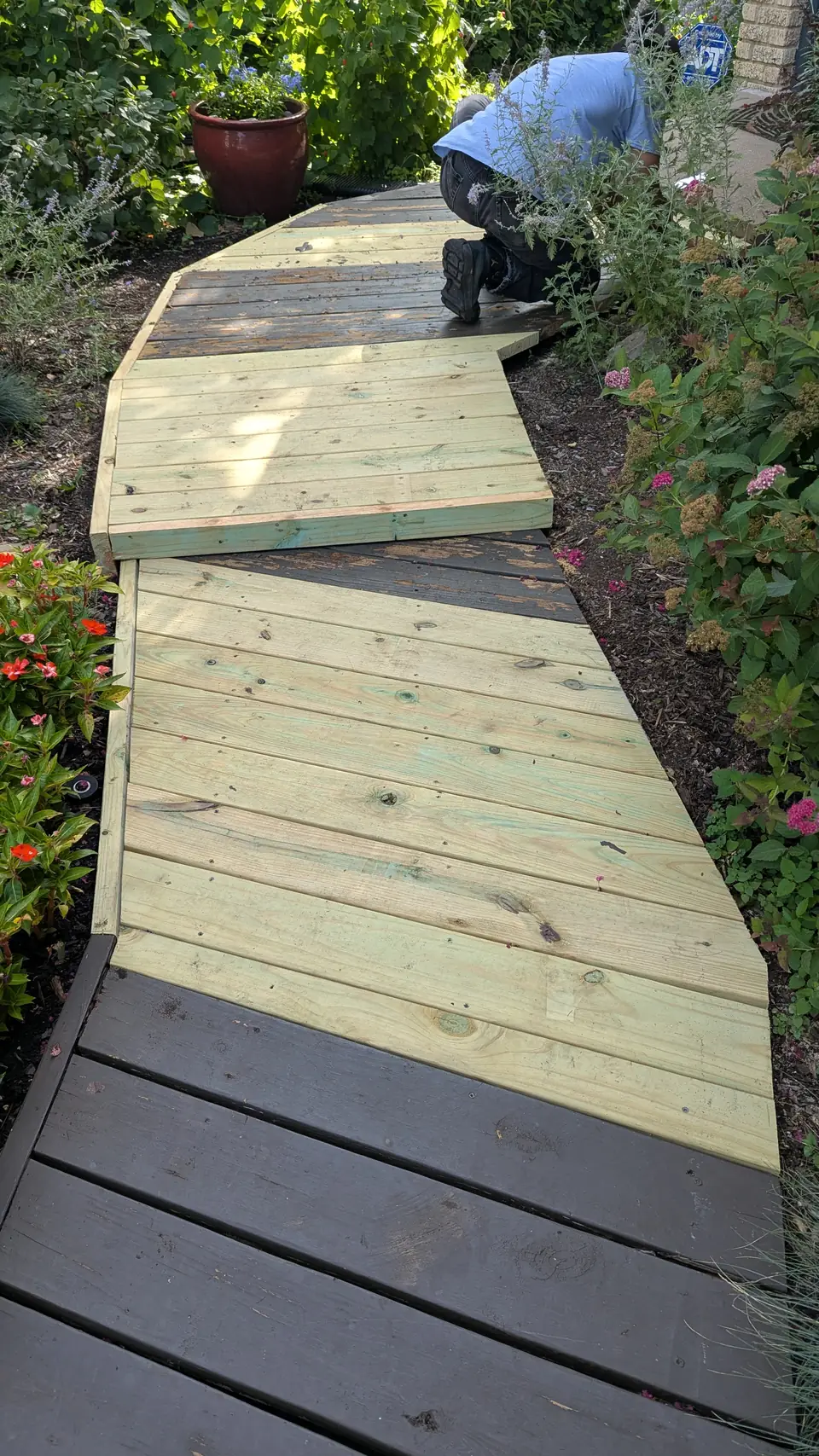
Wood walkways and garden paths have the same issues as decks: boards that loosen, split or go soft, and frames that settle. Boards are cut to follow the line of the path and fastened down over a sound frame, as in Daniel’s wood walkway rebuild.
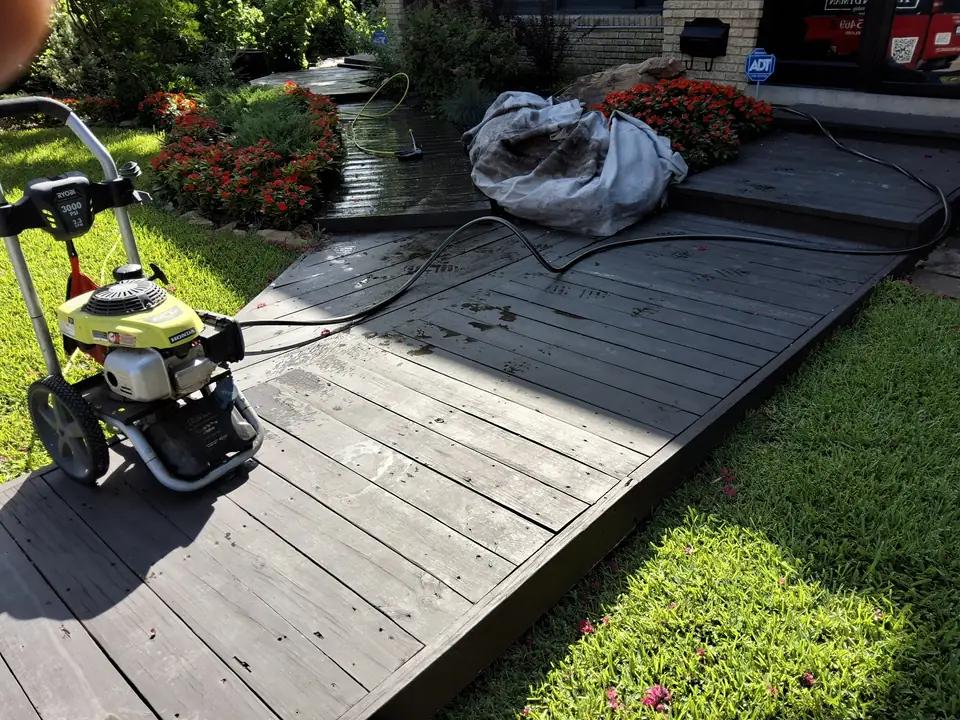
A walkway that has turned green and slick may only need cleaning. The walkway pressure washing project shows a wood front walk and steps washed down. Pressure has to be kept moderate on wood, since too much can tear the surface.
When it becomes a structural job
Some deck and stair problems go beyond repair work. These usually need a contractor, and may need a permit from your city:
- The ledger, where the deck attaches to the house, is loose, rotted or pulling away.
- Posts are rotted at the ground or footings have shifted, and the deck leans or bounces.
- Many joists or a main beam are soft or sagging.
- A tall stair, or a stair that needs rebuilding to a new layout.
- You want to enlarge the deck or change its structure.
Keeping it from happening again
If what we find turns out to be structural, we’ll tell you plainly rather than patch over it. Handyman or general contractor? explains how to tell which you need. Have a loose board or a wobbly step? Send a few photos, including one from underneath if you can, through Request service. We’ll tell you whether it looks like a simple repair or something bigger.
- Keep leaves and debris out of the gaps between boards so water can drain.
- Clean the deck and steps when they turn green or slick.
- Reseal or restain bare wood before it weathers gray and starts to crack.
- Keep sprinklers, downspouts and soil away from the wood, especially at stair bottoms and posts.
- Walk the deck once a season and press on any board or step that looks dark or feels soft.