Key takeaways
- Split the list in two: work that is easier in an empty house, and work that waits until the furniture is placed.
- Exterior locks come first, because you don’t know how many keys are out there.
- Light fixtures and fans are electrical work, which Texas licenses. One at an existing box is simpler than a fixture in a new spot, which also needs new wiring.
- Hang TVs, art and shelves after the furniture is in place, so they line up with what sits below them.
- Hardware throughout the house looks best when it goes in at one time, at one height, from one template.
In this guide
Two lists: before the furniture and after
The order matters more than people expect. Some work is far easier in an empty room, and some only makes sense once you can see where the sofa, bed and dresser actually landed.
- Before the furniture: painting and patching, light fixtures and ceiling fans, blinds and curtain rods, closet rods and shelves, locks and door hardware, anything that makes dust or needs a ladder in the middle of the room.
- After the furniture: TVs, art, mirrors and floating shelves, anchors for dressers, bookcases and wardrobes, baby gates, and anything whose position depends on what sits under it.
Locks and door hardware first
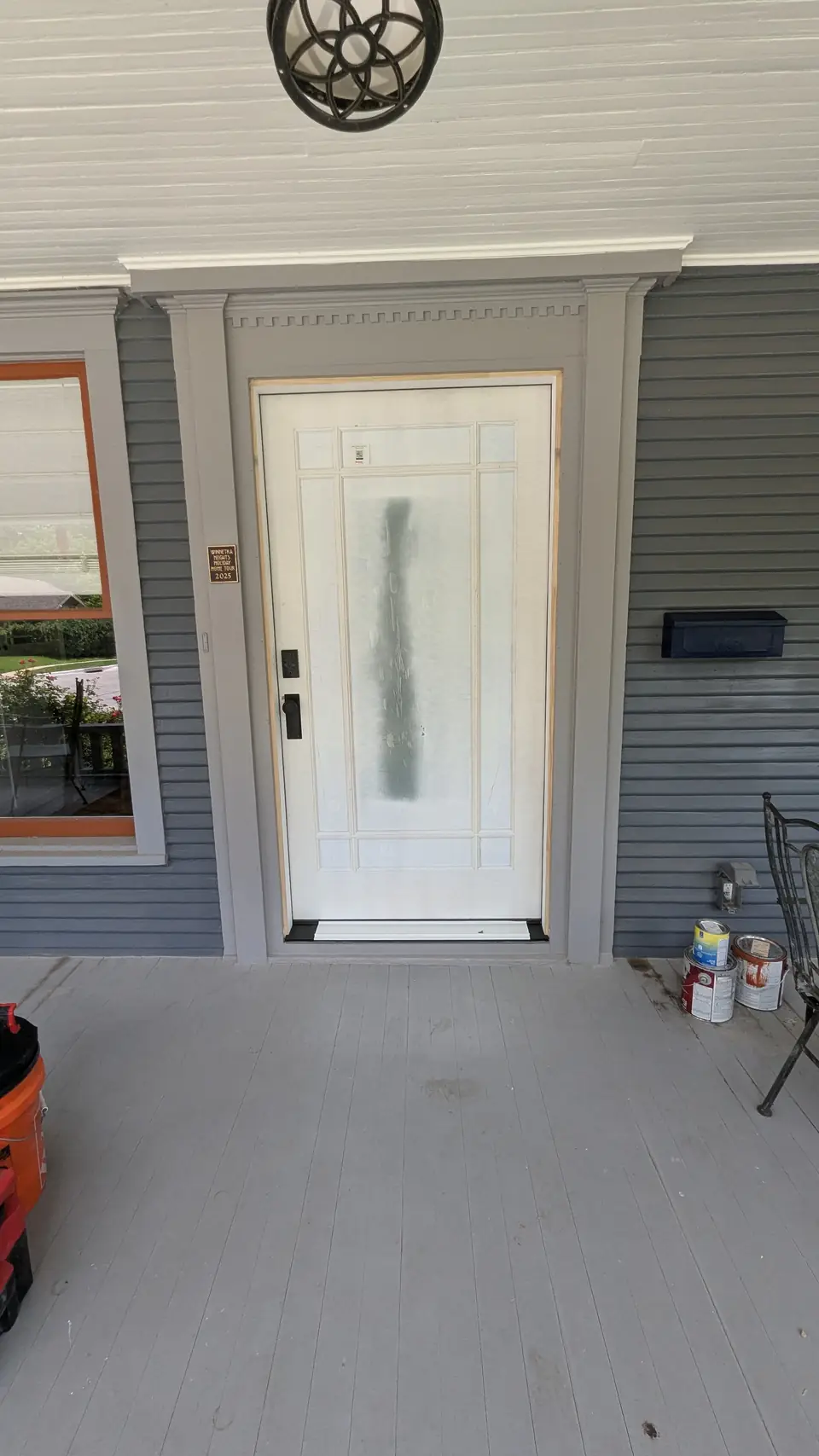
You rarely know how many keys to a house are still out there. Replacing the exterior locksets, or having a locksmith rekey the existing ones, is the first item on most move-in lists. A new lockset has to be fitted square, with the latch and deadbolt throwing fully into the strike, like this front door lock and knob install. A deadbolt that has to be pushed or lifted to lock is a fitting problem, not a lock problem.
While doors are on the list, add the ones that rub or won’t latch, missing stops, and closet doors that jump their track. Why won’t my door close or latch? explains the usual causes. Smart locks and video doorbells have their own considerations, covered in smart locks, video doorbells and cameras.
Window treatments, lights and ceiling fans
Blinds, shades and curtain rods are easier to install before furniture blocks the windows, and they make the house livable sooner. Installing blinds, shades and curtain rods covers inside versus outside mounts and what the brackets need to hold.
New light fixtures and ceiling fans are common on a move-in list; see lighting installation. Replacing one at an existing box is far simpler than adding one, but it is still electrical work, and Texas licenses electrical and plumbing work separately. When you ask for this, ask who will do the electrical part and whether they are licensed; we’ll tell you how we handle it on your job. Check the box rating and the fixture weight first, as described in what to check before buying a light fixture. A fixture or outlet where none exists today needs new wiring, and that belongs with a licensed electrician. We’ll tell you so and help you find one.
Just moved in? Tell Daniel about it
TVs, shelves, art and mirrors
Wait on these until the furniture is in place. A TV should be centered on the seating and at a comfortable viewing height, and art over a sofa or dresser should relate to the piece below it. Doing it the other way around usually means patching holes and doing it again.
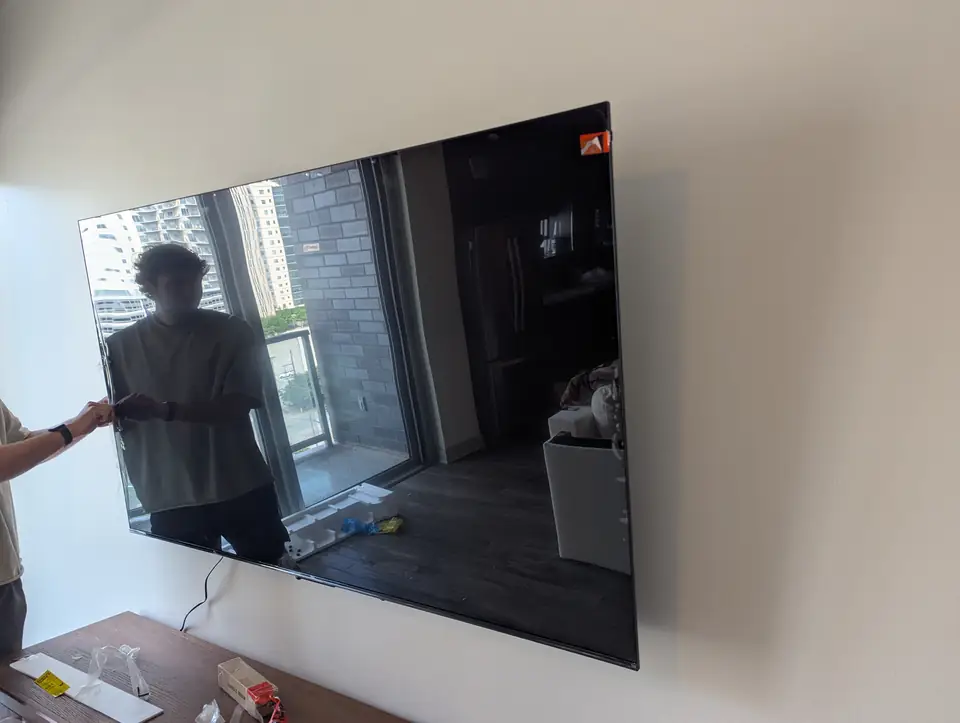
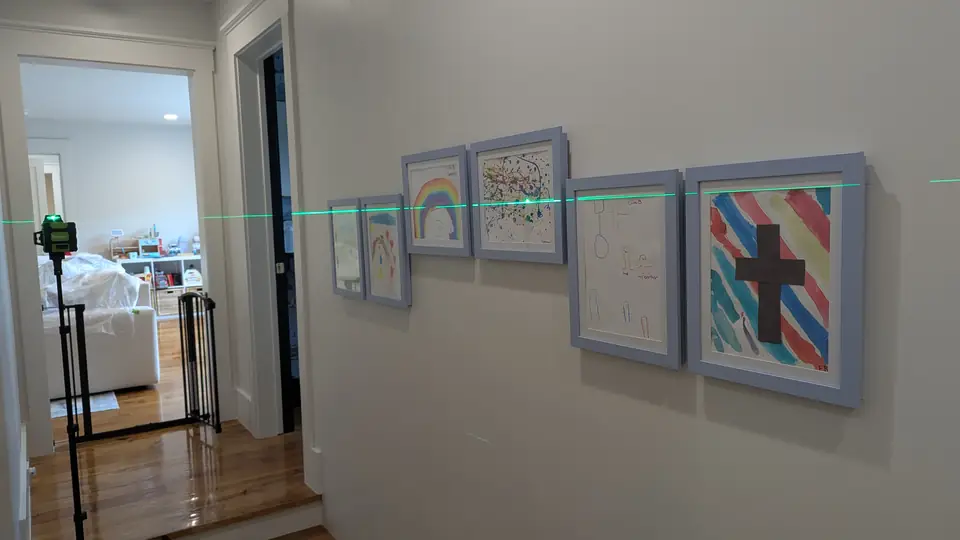
The wall decides the hardware: drywall, plaster, brick and stone each need different anchors. Mounting a TV on drywall, brick or stone and hanging heavy art and mirrors go into detail. In our gallery, a row of prints hung on one laser line and a TV on a low-profile mount show the finish to expect.
Hardware throughout the house
A newly furnished home usually needs a long list of small hardware. Each piece is quick on its own; together they are what makes a house feel finished:
- Cabinet knobs and pulls, placed with a template or jig so every one sits at the same height, like this cabinet door repair.
- Towel bars, robe hooks and toilet paper holders, fastened into studs or proper anchors. Drilling through tile takes care; grab bars that hold explains how it is done without cracking it.
- Closet rods, shelves and hooks, set level and fastened for real weight.
- Entry hooks, mudroom storage and garage rails. Garage, closet and mudroom storage covers the options.
- Doorstops, cabinet bumpers and felt pads, the small things that protect walls and finishes from day one.
Safety items for the first list
- Anchors on every tall dresser, bookcase and wardrobe. See furniture assembly and anti-tip anchoring.
- Stair gates and cabinet latches if there are small children. See babyproofing a home.
- Grab bars in the bathrooms older family members will use.
- Handrails and stair rails that move under your hand. See stair and handrail repair.
- Smoke and carbon monoxide alarms: test them yourself as soon as you move in and note the dates printed on them.
Getting the list done in one visit
Gather what you have already bought, with model numbers, and decide heights and positions for anything that depends on your taste. Send the list and a few photos ahead, so the right anchors and bits come along. How to make a handyman punch list shows how to write it so nothing gets missed.
When the list is ready, send it through Request service. No job is too small to go on it, from a single doorknob to a full day of tasks.