Key takeaways
- Most gate and iron fence repairs, including broken welds and rusted posts, can be welded on site.
- A dragging gate usually points to worn hinges, a broken weld or a leaning post, not the gate itself.
- Automatic gate motors, controls and safety sensors are a gate-operator technician's job.
- Every weld repair needs primer and paint afterward, or the bare steel rusts.
In this guide
What usually goes wrong with metal gates
Metal gates and iron fences fail in predictable places. Most of the damage happens where water sits or where the gate's weight concentrates.
- Cracked or broken welds at hinge knuckles and frame corners
- Worn hinge pins and barrels that let the gate drop
- Posts rusted through at the concrete line, where water collects
- A hinge post that has started to lean
- A frame bent by a car, a fallen limb or wind
- A latch that no longer lines up with its keeper
- Pickets and bottom rails rusted where they sit close to soil or sprinkler spray
Why a metal gate starts dragging
A gate that drags on the driveway or walk has almost always dropped at the latch side. Check the hinges first: worn pins and barrels allow play, and a cracked weld at a hinge lets the whole gate tip. Next, look at the hinge post. Rust at the base or soil movement around the footing can let it lean, and North Texas clay soil moves with wet and dry weather.
The gate frame itself is usually the last suspect. If the corners are cracked or the frame is bent, it can droop even when the hinges and post are sound. Fixing the cause, not grinding the bottom of the gate or lowering the latch, is what keeps it from coming back.
What an on-site repair looks like
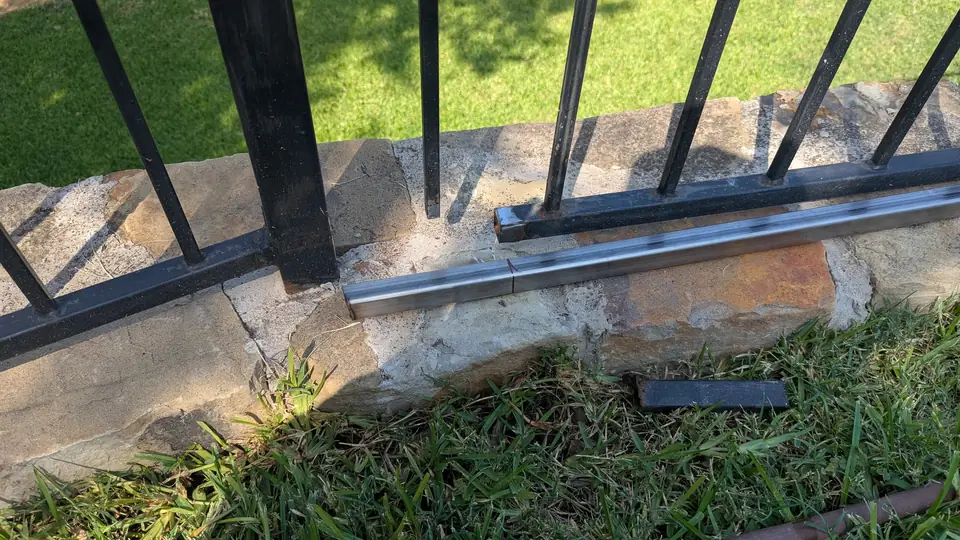
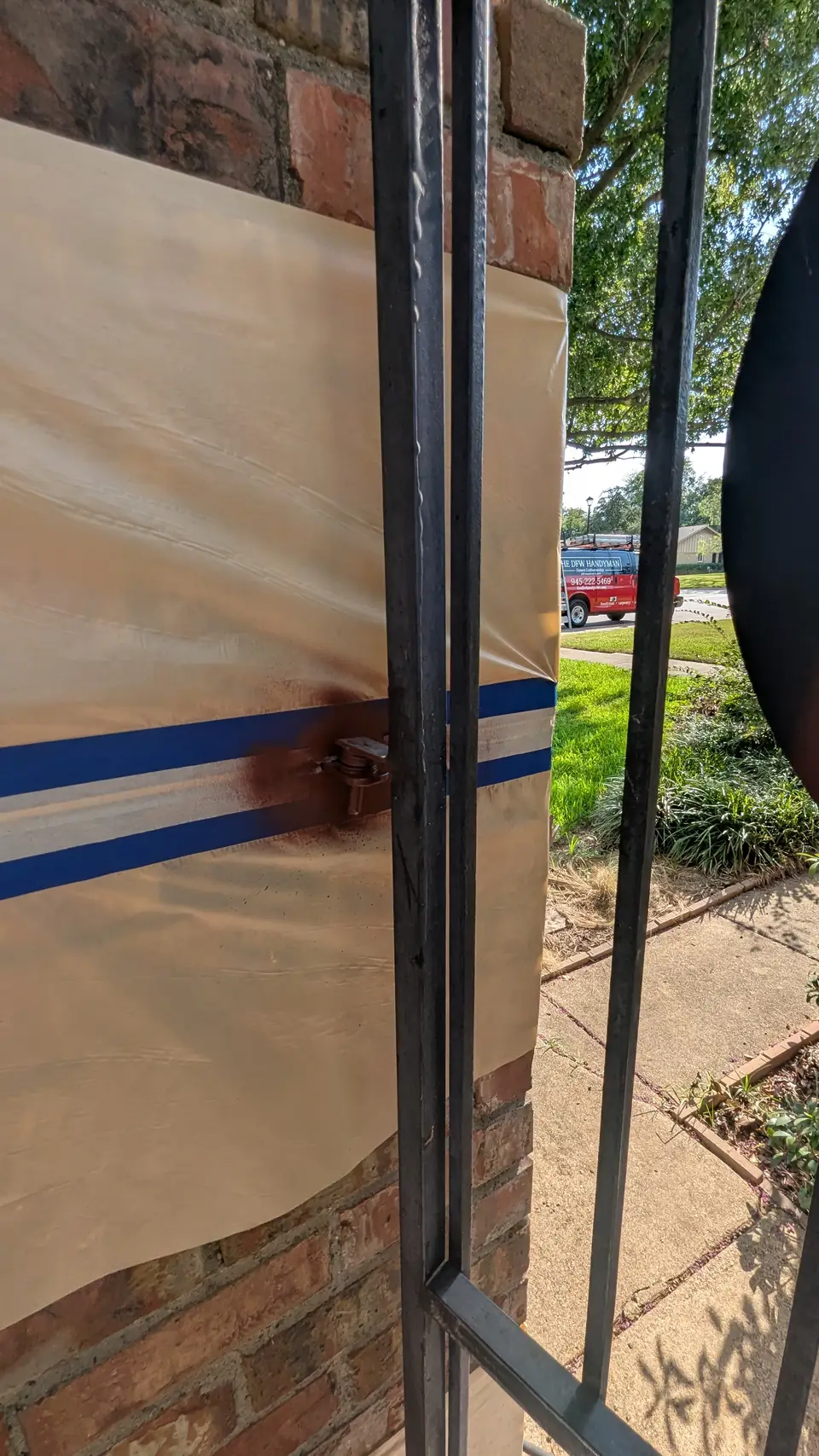
Most gate and fence repairs can be done in place. The gate is supported, the area around the repair is ground to bare metal, and cracked welds are ground out and welded again. Weak corners can be reinforced with gussets or plates. Worn hinges are cut off and replaced with new ones, often heavier than the originals.
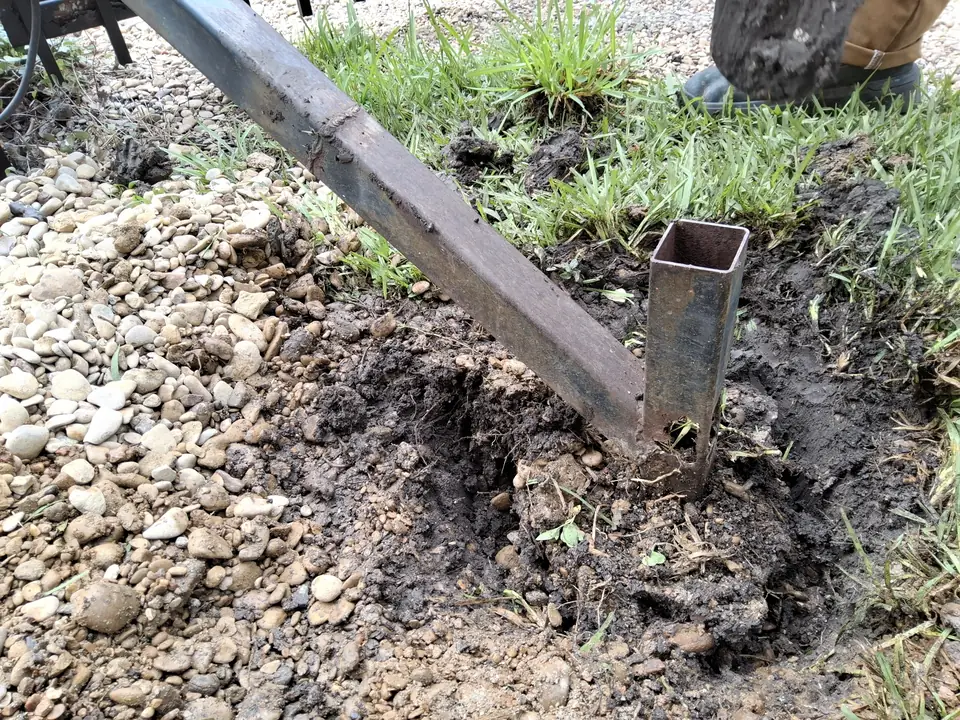
A post rusted at the base can be repaired by cutting out the rotten section and welding in new steel, or replaced and set in fresh concrete. Afterward, every bare spot gets primer and paint so the repair does not become the next rust spot.
Smaller problems are handled the same way. A gate that squeaks usually has dry or worn hinges: greasing fittings or replacing worn hinges with ball-bearing hinges often quiets it without rebuilding anything. A latch that no longer fits an old gate can be replaced with a standard one or a custom latch made to suit the gate's style and the way you use it. A keypad or lock box can be mounted on a bracket welded to the frame.
Welding outdoors throws sparks, so a careful welder clears dry grass and leaves, shields nearby wood fences and plants, and keeps water on hand. Some work does go to a shop: a full rebuild, or a gate that will be powder coated or galvanized, which has to be done in a plant.
Metal gate or iron fence giving trouble? Tell Daniel about it
When it is a fence company or gate-operator job
Being honest about the line saves you time. A welder repairs and fabricates the metal; other trades handle the rest.
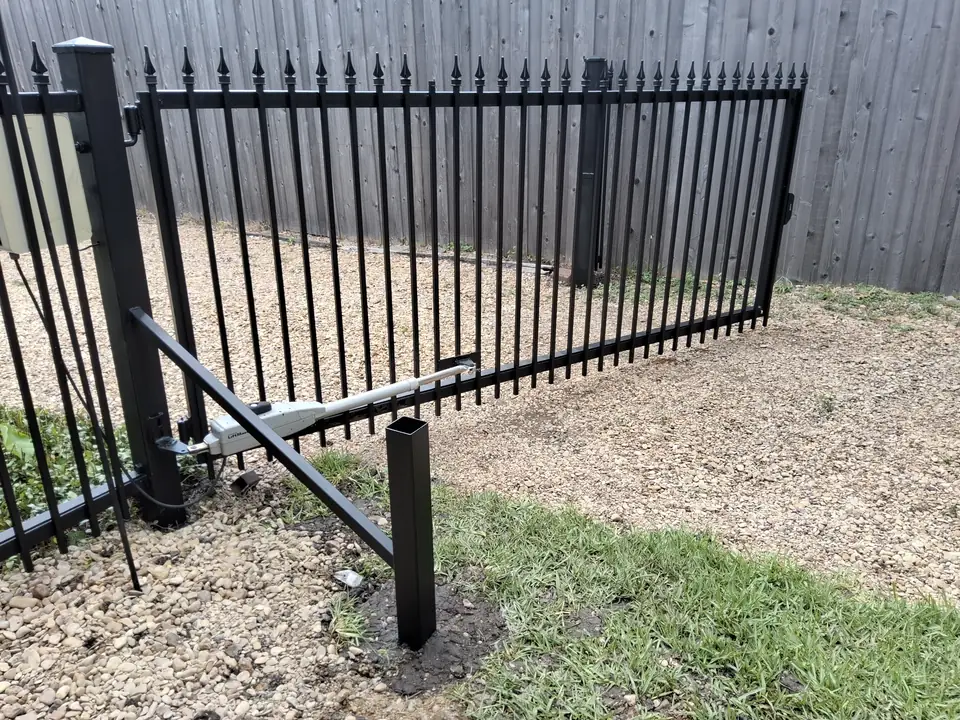
- Automatic gate motors, control boards, keypads and safety sensors: a gate-operator technician
- Long runs of new fence or replacing an entire fence line: a fence company
- Questions about where the property line is: a survey before new fence goes in
- New electrical circuits to power an opener: a licensed electrician
Repair or replace?
Repair makes sense when the frame is mostly sound and the damage is at the hinges, a corner, a post or a latch. Replacement is the better choice when rust has eaten through many members, the frame is bent beyond straightening, or you want a different design. What drives the difference is how far the rust has spread, the size of the gate, how much matching ornament is involved, and the finish you choose.
Custom work is the other side of welding. A new gate, a pedestrian gate to match a driveway gate, or a replacement post or latch can be fabricated to match the existing ironwork.
Keeping a metal gate working
Grease hinges that have fittings, and oil the rest. Keep paint intact and touch up chips before rust spreads under them. Clear soil and mulch away from the base of posts so water drains off, and turn sprinklers away from the fence.
Welding is part of what The DFW Handyman does: iron gate repair, iron fence post repair and gate post welding, along with wood fences and gates, so one person can handle both. See welding and metalwork and fence and gate repair, or send photos of the gate, its hinges and the base of the posts through the service request.