Key takeaways
- The posts carry the gate. Sound posts, or new ones, come before a new gate.
- Measure the opening and note the ground: a slope or a high spot decides how a gate can swing.
- Most “wrought iron” made today is mild steel, which can be shaped into classic or modern designs.
- Finish matters as much as design: paint, powder coating or galvanizing, chosen for how the gate lives.
- An automatic opener is its own trade. A gate meant for one should be designed for it from the start.
In this guide
Start with the opening and the posts
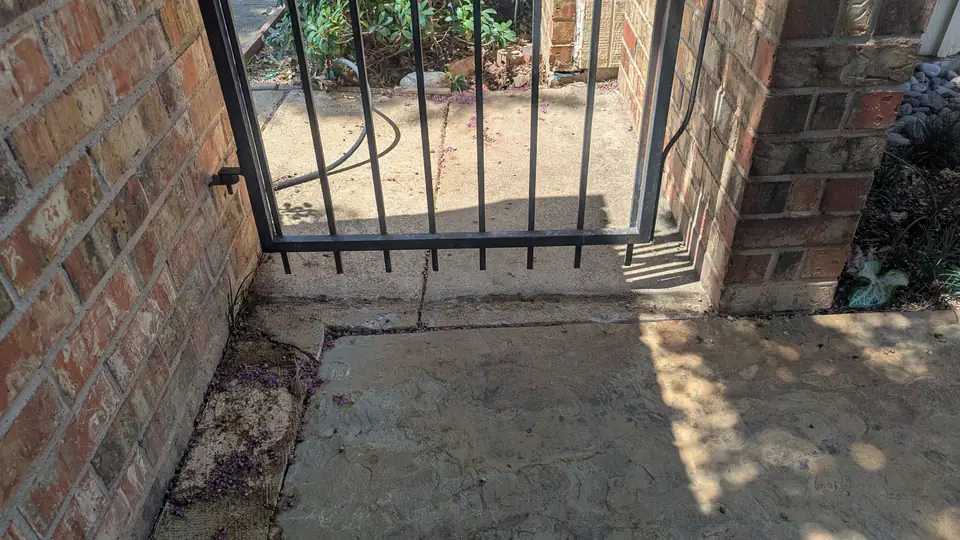
Every custom gate begins with a measurement between the posts, at the top and at the bottom, because posts are rarely perfectly plumb. Then look at the ground the gate crosses. A walk or driveway that rises within the swing will stop a gate partway open unless the design allows for it: swinging the other way, a shorter leaf, or a sliding gate instead.
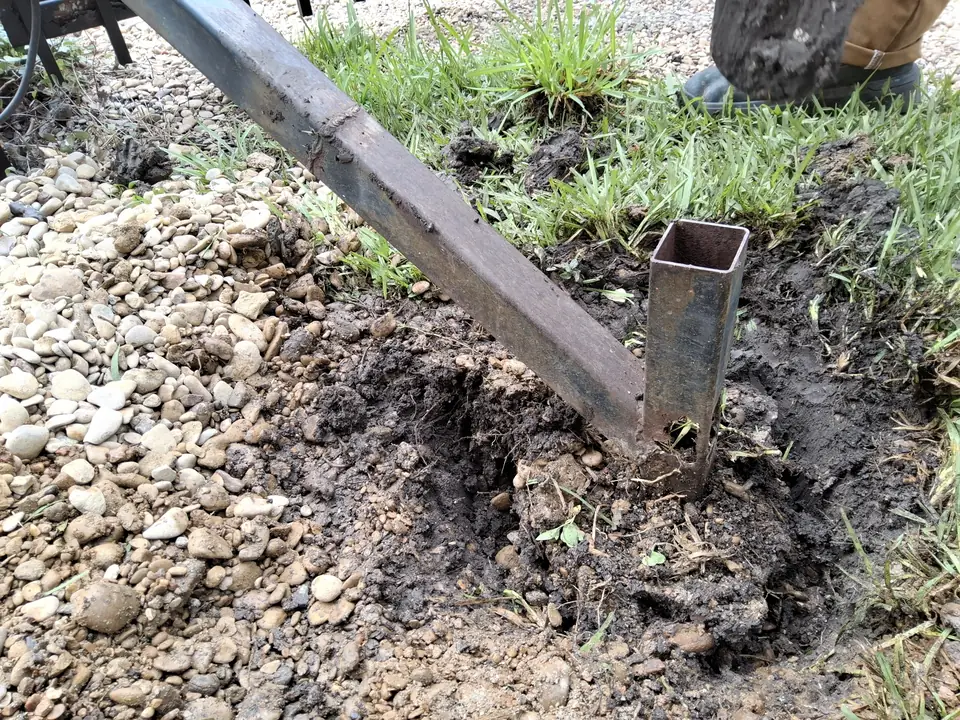
The posts matter even more. A heavy gate on a weak post sags and drags no matter how well the gate is built. Steel posts usually rust first at the ground, as in Daniel’s gate post weld repair, where the post was dug out to reach sound steel. Masonry columns need anchors set into solid material. If the posts are not up to the job, they are repaired or replaced first.
Classic or modern: matching the design to the house
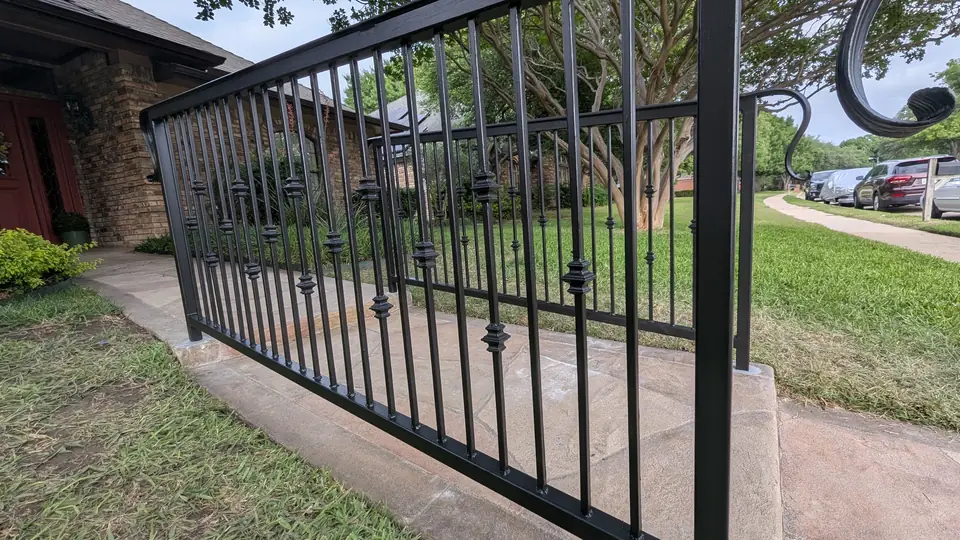
Most decorative “wrought iron” made today is mild steel, which means it can take almost any style. Traditional gates use pickets, scrolls, finials and arched tops. Modern steel gates use clean lines: flat bar, square tube, horizontal slats, or a steel frame filled with wood or perforated panels for privacy.
Good design takes its cues from the house: the lines of the windows, the color of the trim, the style of an existing railing or fence. A walk gate can be built to match a driveway gate, and new work can follow the pattern of existing ironwork, so send clear photos of what is already there.
If privacy matters, say so early. A solid or slatted gate catches far more wind than an open picket design, which affects the hinges, the latch and the posts.
Walk gates and driveway gates are different jobs
A walk gate for a side yard or front path is a modest piece. The questions are which way it swings, whether it should close and latch on its own because of children, pets or a pool, and whether you want a lock. A driveway gate is larger and heavier, and the choices multiply:
- Swing or slide. Swinging gates need clear space inside the arc. Sliding gates need room along the fence line and a track or support.
- Single or double. A pair of leaves keeps each one lighter and the swing shorter.
- Posts and footings. The size and weight of a driveway gate put real load on the posts.
- Clearance. Check the ground at every point in the swing, including any rise in the driveway.
- Automation. Decide now, even if the opener comes later.
Thinking about a custom gate? Tell Daniel about it
Automatic openers: plan for them, but they are their own trade
An automatic opener involves the operator, its wiring, safety sensors and controls. The operator and its installation usually belong with a gate-operator company, and any new electrical circuit for it belongs with a licensed electrician. We’ll tell you that up front and help you plan around it.
What a gate builder can do is design the gate for the opener: a frame stiff enough not to flex, hinges and posts suited to an operator, and mounting points in the right place. Can a handyman fix a metal gate? covers the line between gate repair and opener work on an existing gate.
Finishes that hold up outdoors
Bare steel rusts, so the finish is part of the design. Paint is the most flexible and the easiest to touch up later. Powder coating gives a harder, even finish but is applied off site, so the gate is finished before it is hung. Galvanizing protects steel from rust very well and can be painted or powder coated over for color. Small details help too: capped tube ends and no pockets where rain can sit.
Wrought iron railing: repair or replace? compares these finishes in more detail.
Getting a custom gate made in Dallas and nearby cities
Look for someone who designs, builds and installs, so one person is responsible for the gate fitting its opening. Ask to see photos of gate and railing work, ask who will measure, and ask how the gate will be finished and hung. Our welding page shows what Daniel builds and repairs. The Dallas, Highland Park and University Park pages list the areas we serve.
How long a custom gate takes depends on the design, the finish, whether the posts need work first, and the schedule at the time. Ask once the design is settled.
Before ordering, check with your city, and your HOA if you have one, about rules on gates, fence heights and driveway gates. Requirements vary by city and neighborhood, and a home in a historic district may have its own review.
Have a gate in mind? Send photos of the opening, the posts and any ironwork you want to match through Request service, and we’ll talk through the design.