Key takeaways
- Start with the job the piece does: what it holds, how much it weighs, and what it fastens to.
- Brackets and frames are only as strong as their attachment. Studs, masonry or cabinet framing decide the design.
- Steel welds well. Cast iron and aluminum are different metals with different repair methods, so say which you have.
- Outdoor pieces need a finish chosen for weather, plus details that let water drain away.
- A sketch, a few photos and rough measurements are enough to start the conversation.
In this guide
What custom fabrication covers in a house
Custom fabrication simply means a metal piece made to fit one spot instead of bought off a shelf. In a home that is usually something modest and useful:
- Hidden or exposed brackets for heavy shelves, mantels and floating shelves
- A steel support frame or brackets under a wood or butcher-block countertop
- A table base for a slab top you already own or plan to buy
- A simple outdoor bench or plant stand
- Railings and handrails for steps and stairs that standard parts don’t fit
- Repairs to broken steel furniture frames, brackets and hardware
Brackets for shelves, mantels and countertops
A bracket is the simplest custom piece and the one where details matter most. Store-bought brackets come in set lengths and depths. A made-to-fit bracket can match the exact depth of a thick shelf, hide inside a floating shelf, follow an uneven wall, or carry a mantel or a long countertop overhang.
The bracket itself is rarely the weak point. The attachment is. A bracket fastened into a stud or solid masonry carries far more than the same bracket fastened into drywall alone, so the wall decides the design: where the studs are, whether it is brick or plaster, and what is behind it. Planning built-ins and floating shelves explains how to think about the load before choosing hardware.
For a wood countertop on a steel frame, one more detail matters: wood moves with the seasons. The frame should fasten to the top in a way that lets the wood expand and shrink, usually through slotted holes, or the top can crack. For a stone top with a long overhang, ask the countertop fabricator what support they require before anything is built, because they set the rules for their material.
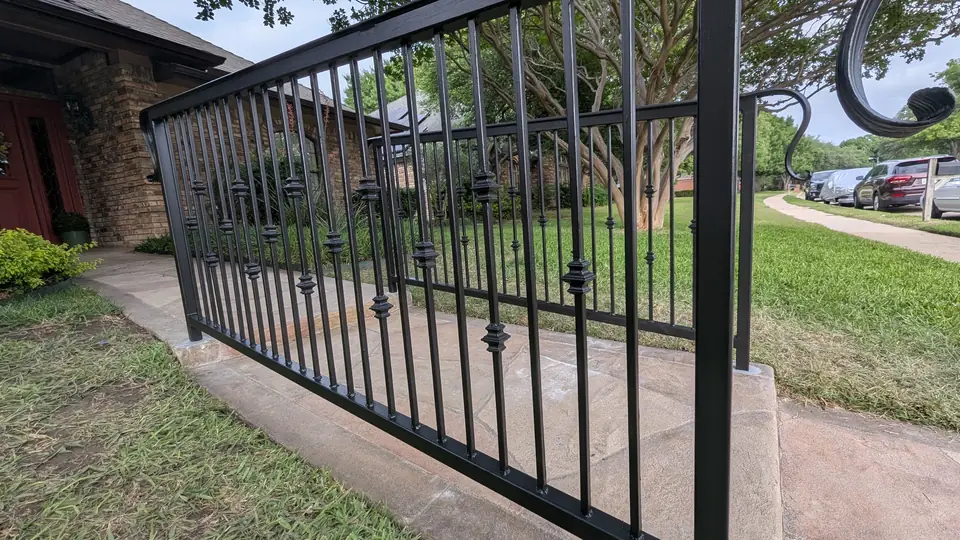
Table bases and outdoor benches
A steel base for a wood slab or glass top is a common request. Settle a few things first: the height you want, the size and weight of the top, how far the top overhangs the base, and whether people will sit with their knees under it. A base that looks right in a sketch can block chairs or feel tippy if the legs sit too far in.
A simple outdoor bench is straightforward in steel, or in steel with wood slats. Outdoors, the details change. Hollow tube needs a way for water to drain or it rusts from the inside, feet should not sit in standing water, and the finish has to suit the weather. Decide whether the bench stays put or moves around, since a fixed bench can be anchored to a slab.
Finish choices are the same ones used on railings and gates: paint, powder coating or galvanizing. Wrought iron railing: repair or replace? compares them.
Have a metal piece in mind? Tell Daniel about it
Repairing a broken metal chair or furniture frame
A cracked weld or a broken leg on a steel chair, stool or patio frame can usually be welded. The repaired spot is ground smooth and refinished, so ask whether the whole piece should be refinished at the same time for an even color. What it is made of matters, so check before you send photos:
- Steel, including most tube and bar furniture, welds well.
- Aluminum patio furniture needs a different welding process. Ask before assuming it can be repaired.
- Cast iron, common in older garden furniture and decorative pieces, is brittle and hard to weld. Some breaks can be repaired and some can’t.
- Thin, rusted tube may not hold a weld at all. If the metal around the break is rusted thin, a new section may need to be made instead.
- A family piece deserves a word up front. The approach on an heirloom is more careful than on a chair you would replace anyway.
An unusual staircase: the railing versus the stairs
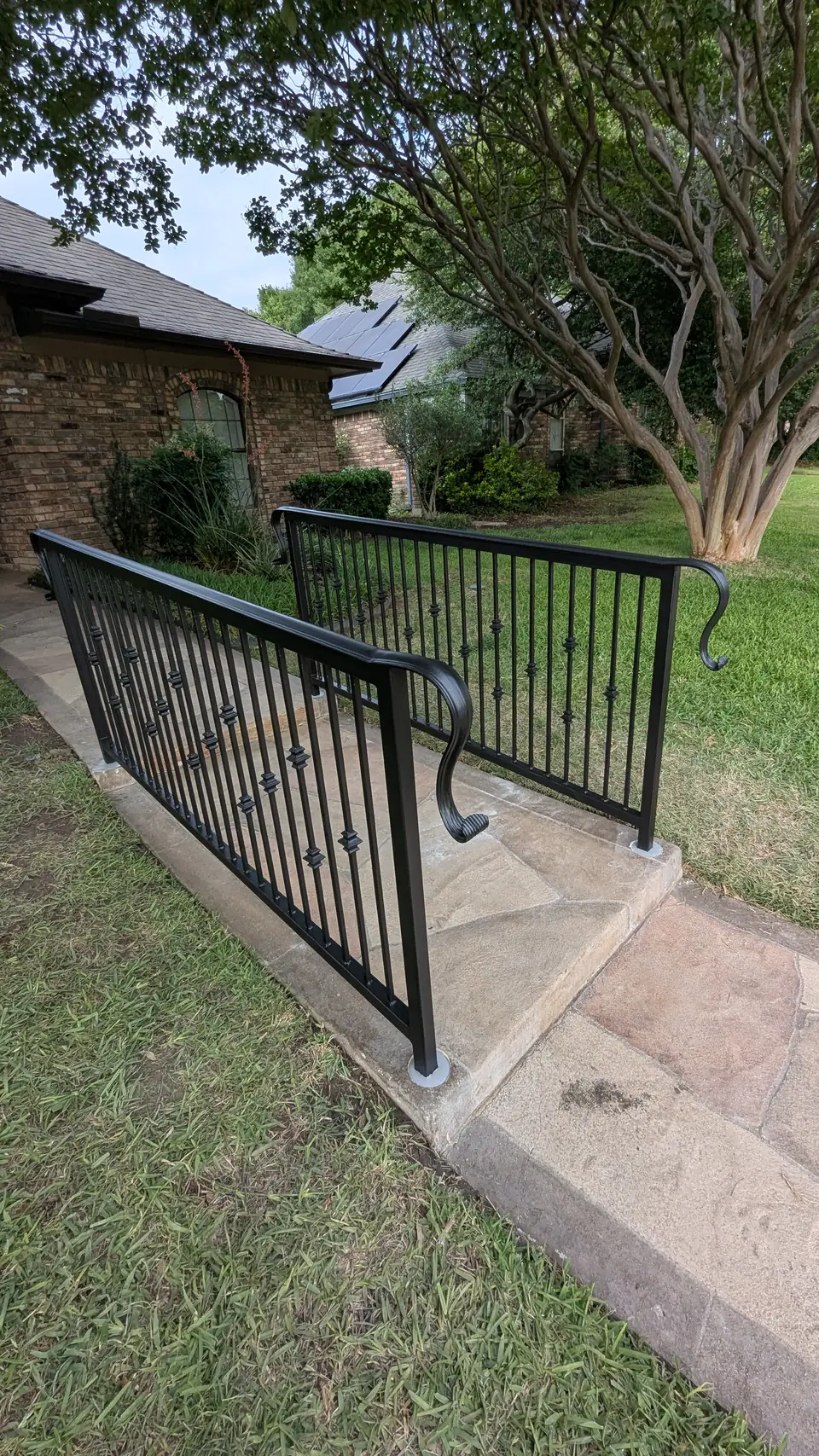
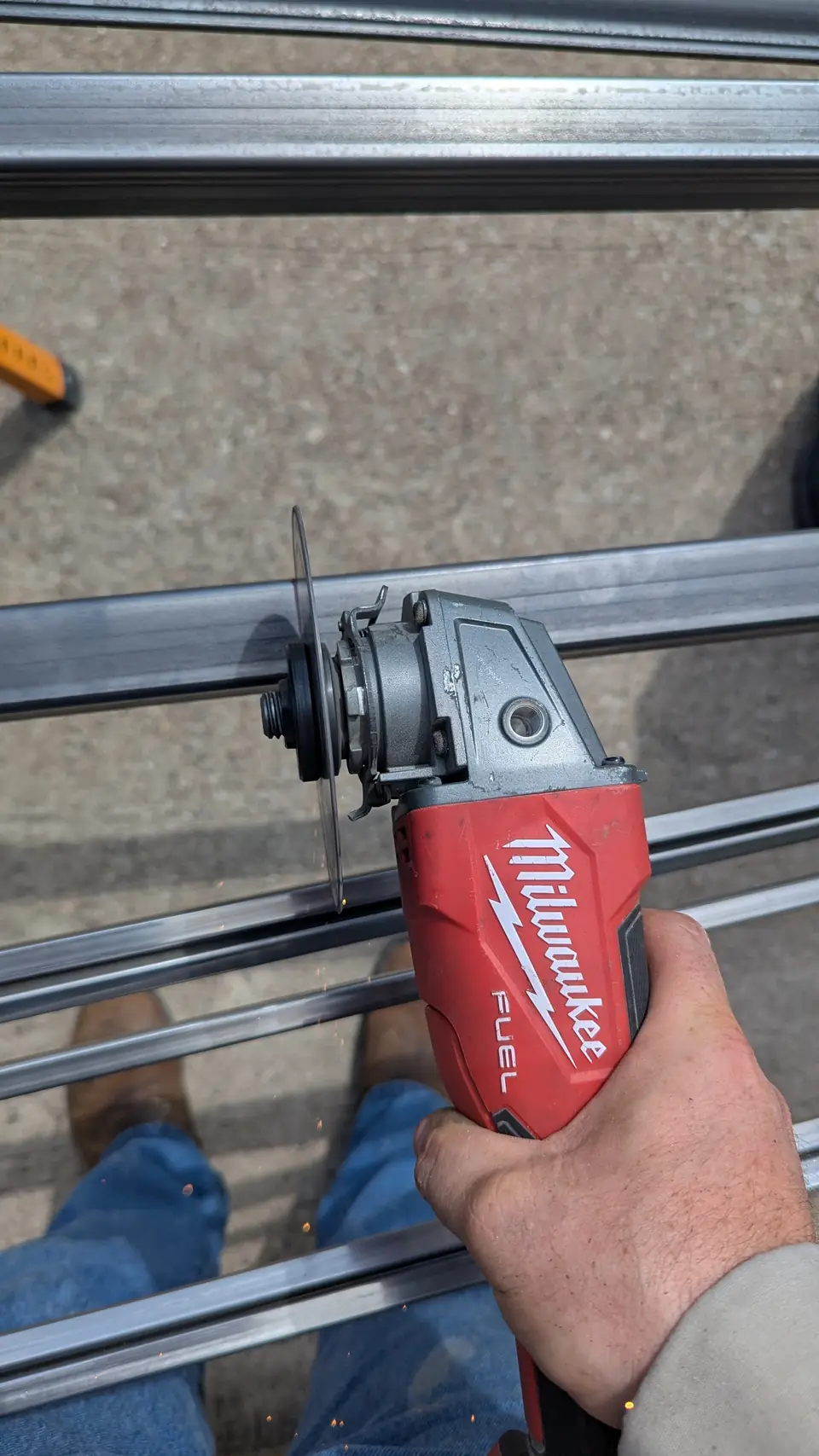
Curved stairs, stairs with odd turns, steps along a sloped walk and outdoor stairs between levels often don’t fit standard railing parts. Custom railings and handrails for stairs like these are exactly what fabrication is for: rails cut and fitted to follow the line of the stair, posts set where they can be anchored firmly, and a grip that suits the people who use it. Daniel’s welded handrail for a front walk shows the process: steel cut and fitted on site, welded, set along both sides of the walk and finished in black.
Building a new staircase, or changing the structure of an existing one, is a different kind of project. Stringers, landings and anything that carries people’s weight are structural, and that work may need a design from an engineer and a permit from your city. Check with your city before planning it. If a project crosses into structural work we don’t take on, we’ll say so up front. For repairs to wood stairs and handrails, see stair and handrail repair.
From idea to installed piece
More examples of what Daniel builds and repairs are on the welding page. Have a piece in mind? Send photos and a sketch through Request service. We’ll tell you what we can make, and if it isn’t a good fit for us, we’ll say so.
- Send what you have. A sketch, a photo of something you like, a photo of the spot, and rough measurements.
- Describe the load. What sits on it, how many people use it, and whether it lives indoors or out.
- Settle the design. Size, material, how it attaches and how it looks. A simple drawing avoids surprises.
- Choose the finish. Paint for most indoor pieces and for repairs that must match; powder coating or galvanizing for harder-wearing outdoor work.
- Fit and install. Pieces that attach to the house are checked against the actual wall, floor or cabinets before they are fastened.