
Key takeaways
- Rust starts where water sits: post bases, wall connections and joints that trap rain.
- One damaged post or connection is a repair. Damage across the whole frame points to replacement.
- A leaning or sagging carport is a safety issue. Park elsewhere and keep people out from under it until it is looked at.
- A new canopy over a door is only as good as its attachment to the house and the way it sheds water.
- Some new structures and major rebuilds need a city permit, engineering or HOA approval. Check before you order.
In this guide
What usually goes wrong
Metal awnings and carports fail in predictable places. Knowing them helps you describe the problem and tells you roughly how big it is.
- Post bases. Water collects where a post meets the concrete or soil, and the steel rusts thin or through.
- Wall connections. On an awning, the brackets or rail fastened to the house loosen or rust, and the front starts to drop.
- Cracked welds. Wind and years of movement can crack a weld at a joint, often where a beam meets a post.
- Storm damage. Hail, wind and falling limbs bend frame members and dent or tear roof panels.
- Impact. A car or trailer that clips a carport post can bend it and shift the whole frame.
- Failed finish. Once paint peels, rust spreads under it, which is why refinishing is part of most repairs.
Repairing an awning frame or a carport post
Yes, a welder can repair a damaged metal awning frame or carport post. A rusted post is usually cut back to sound steel and a new section welded in, or the post is replaced, then primed and painted to match. A bent member can sometimes be straightened, but steel that has kinked is usually replaced. A post with loose or rusted anchors at the slab may need new anchoring at the base. Cracked welds are ground out and rewelded.
On a carport, the roof has to be supported temporarily while a damaged post is cut out and replaced. That is one reason post repair is not a weekend project: removing a post from a loaded frame without support can bring the roof down.
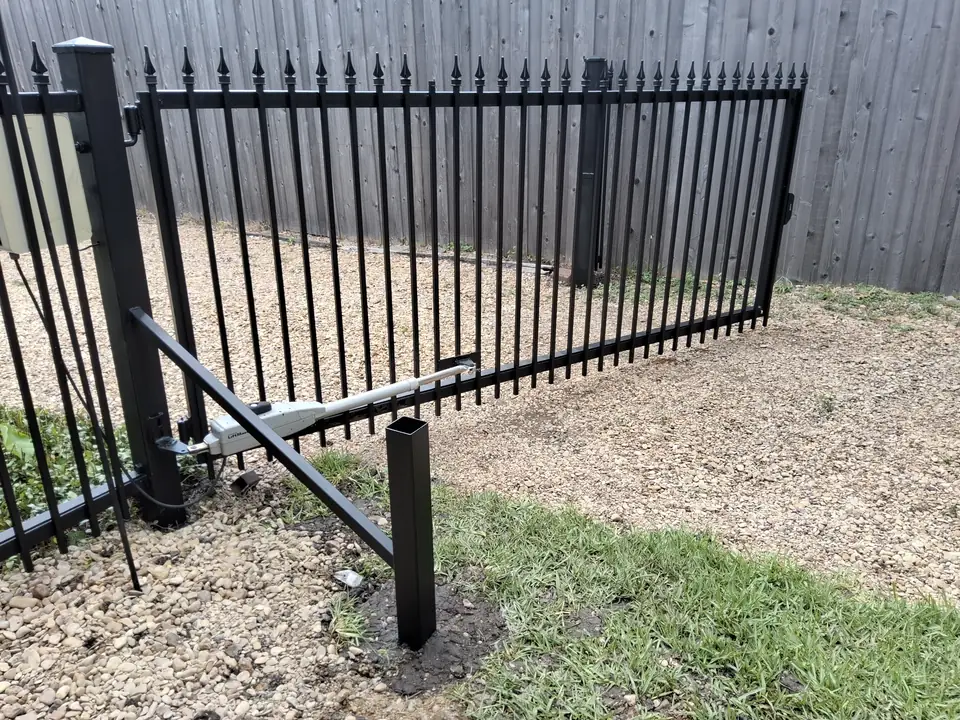
Daniel’s iron fence post repair shows the same approach on a fence post that had rusted through at the ground: the damaged section cut away, the post rebuilt, welded and reset. More on what we repair is on the welding page.
Reinforcing an existing carport
Reinforcing usually means adding bracing at the corners so the frame resists swaying, adding gussets at weak joints, replacing thin members with heavier ones, or adding a post where a long span sags. On a frame that is basically sound, that can make it noticeably stiffer and steadier.
Two cautions. First, reinforcement can’t rescue steel that is rusted through; rusted parts are replaced first. Second, if the goal is to carry more than the carport was built for, such as heavier roof panels, solar panels or storage on top, the design itself is changing, and that may call for engineering and a permit. Check with your city before making that kind of change.
Awning or carport showing damage? Tell Daniel about it
How do you know a damaged carport needs replacing?
Replacement usually makes more sense than repair when:
- Several posts are rusted through, not just one.
- The frame is twisted or leaning and won’t pull back square.
- Rust has eaten into connections throughout, so each repair reveals more.
- Roof panels and the purlins that hold them are bent or torn across most of the roof.
- It no longer fits how you use it, such as a taller vehicle or a second car.
When repair is still the right call
Repair makes sense when the damage is in one or two places and the rest of the frame is solid and straight. A careful look at the post bases, the connections and how plumb the frame stands usually settles it. When should you repair instead of replace? walks through the same reasoning for other parts of a house, and Can a handyman fix a metal gate? explains what on-site welding repair involves.
A new steel awning or canopy over a door
A steel awning or canopy over a front or side door keeps rain off the step and the door. A modern design with a slim steel frame and a flat or gently sloped top suits many houses. The design questions are practical: how far it projects, how high it sits above the door, whether it is held by brackets, by rods back to the wall or by posts, and what the top is made of.
Two things decide whether it works over time. The attachment has to reach solid structure, which on a brick house means knowing what is behind the brick, and on siding means finding the framing. And it has to shed water away from the wall, with the joint at the wall sealed so water doesn’t run behind it. If a canopy would tie into the roof itself, that part belongs with a roofer.
New carports follow the same logic: sized for the vehicles, set on sound footings or a slab, and finished for weather. Paint, powder coating and galvanizing are the usual finishes; Wrought iron railing: repair or replace? compares them. Homeowners in Plano and Frisco can see the areas we serve on our Plano and Frisco pages.
Permits, engineering and HOA rules
A new carport, a large awning or canopy, or a major rebuild may need a city permit, and some may need engineered drawings, depending on the city and the size of the structure. Many neighborhoods also have HOA rules about carports and exterior changes. These are checks for you to make with your city and HOA before anything is designed or ordered. Requirements vary, so ask them directly rather than going by what a neighbor did. Small exterior repairs: contractor or handyman? has more on when approvals come into it.
Send photos of the damage, or of the doorway or driveway you have in mind, through Request service. We’ll tell you whether it looks like a repair, a reinforcement or a replacement, and if it needs a different kind of contractor, we’ll say so.