Key takeaways
- Ask first whether the core is sound: the door slab, the frame behind the trim, the main rails of a fence or railing.
- Damage confined to one spot is a repair. Damage that keeps showing up in new places points to replacement.
- Repair keeps original materials and character, which matters most in older homes.
- Replacement brings its own work: trim, paint, fitting and disposal. Compare the whole job, not just the part.
- A good tradesperson shows you the damage and explains both options before deciding for you.
In this guide
Start with one question: is the core still sound?
Most household things have a core and a surface. A door has a slab and a frame; the hinges, latch and paint are the surface. A window has a sash and a frame; the sill and the trim take the weather. An iron fence has its main rails and posts; the base of a post and the bottom rail take the water.
When the core is solid, the problem is almost always repairable. Hinges can be reset, a strike plate moved, a rotted section of trim cut out and replaced, a rusted post base cut back to clean steel and rebuilt. When the core has failed, such as a door slab that has split, a frame that is soft all the way through, or a railing whose main rail is rusted thin, repairs start chasing the problem instead of fixing it.
Signs a repair is the right call
- The damage is in one place: one corner of a sill, the bottom of one jamb, one post at the ground.
- The item still does its job once the problem spot is dealt with, like a door that closes fine after the hinges are tightened.
- Matching material is available, or the repaired area will be painted or stained to blend in.
- The piece has character you would lose: an original wood door, old trim profiles, hand-forged ironwork.
- The cause can be fixed too, so the damage won’t simply come back. Water is usually the cause.
Signs replacement makes more sense
- The core has failed: a split slab, a frame soft through its thickness, a rail rusted through in several places.
- Each repair reveals more damage, and the sound material left would not hold fasteners.
- Parts or profiles can no longer be matched and the patched result would look wrong in a prominent place.
- It is a safety item, like a handrail or grab bar, and a repair would leave doubt about whether it will hold.
- You want a change anyway: a different style of door, a new railing design, a modern fixture.
Repair or replace? Not sure yet? Tell Daniel about it
Doors, trim and cabinets
A door that rubs, sticks or won’t latch is almost never a reason to buy a new door. The usual causes are loose hinge screws, a frame that has shifted slightly, or a strike plate that no longer lines up. Resetting hinges with longer screws into the framing, adjusting the strike, or planing a rubbing edge and sealing it again fixes most of them. See Why won’t my door close or latch? for the common causes.
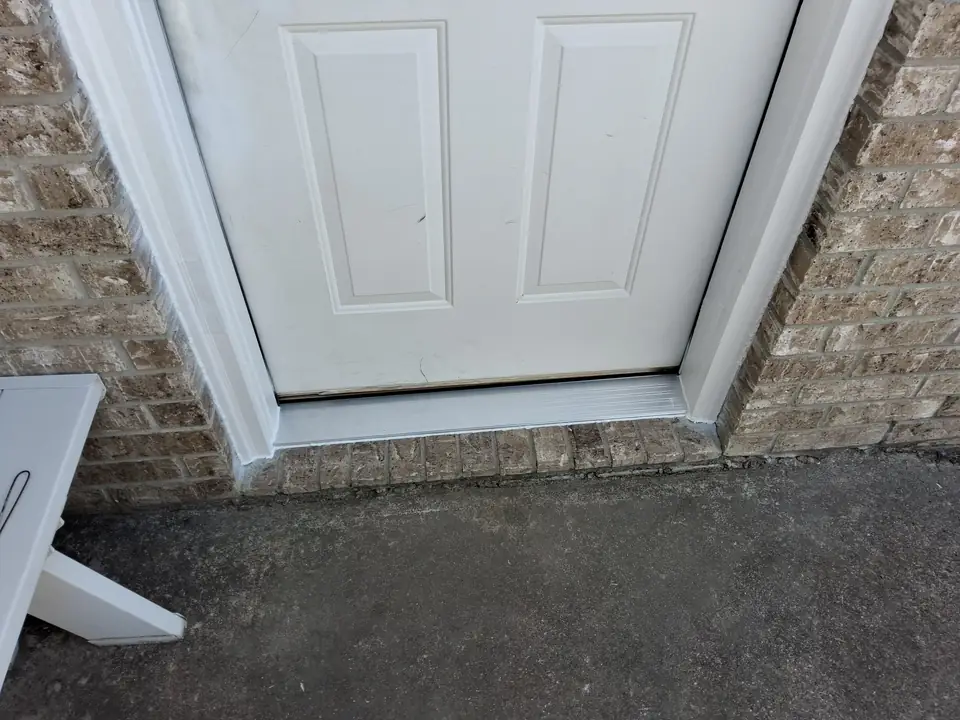
Rot at the bottom of an exterior door jamb is also a repair in most cases: the soft section is cut out and a new piece is fitted, primed and painted, as in Daniel’s door jamb and threshold repair. Cabinet doors that sag usually need hinge adjustment or new hinges, not new cabinets. Replacement becomes the answer when a slab is split or warped badly enough that it won’t sit flat in its frame.
Wood exposed to weather
Window sills, door trim, fascia and gable trim fail where water sits. If probing with an awl finds soft wood only in one area, that section can be cut out and rebuilt, sealed and painted. The window sill rot repair and gable trim rebuild in our gallery show what that looks like.
When soft wood continues past the trim into the framing or sheathing behind it, the job is bigger than a trim repair, and you should hear that before work continues. How to spot wood rot around doors and windows explains what to look for.
Iron fences, gates and railings
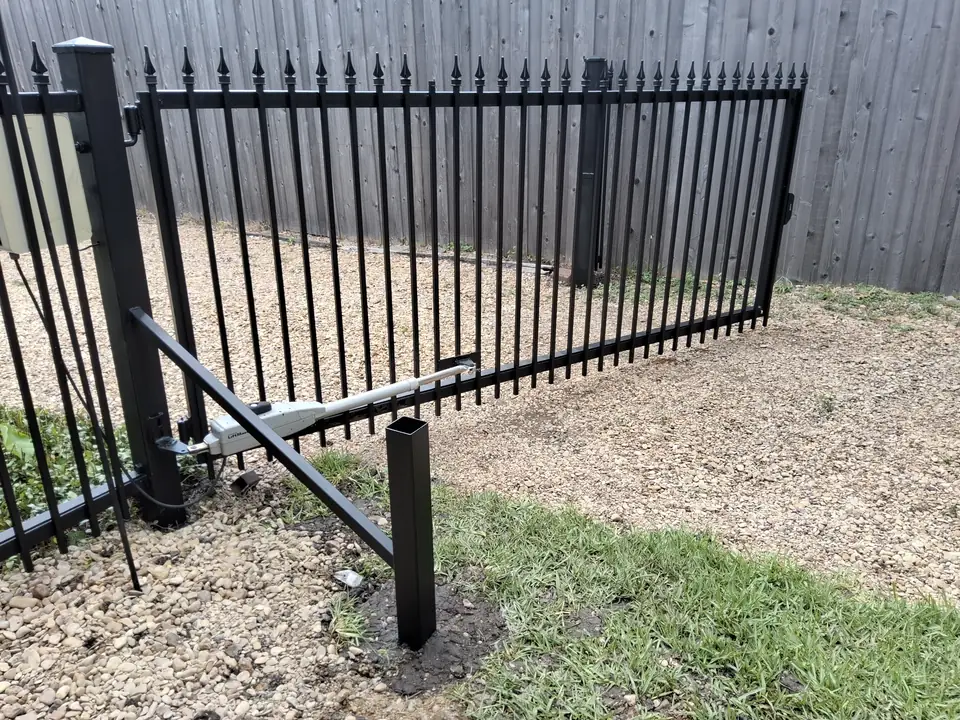
Wrought iron and steel usually fail at the bottom: where a post meets the ground or the bottom rail holds water. A rusted section can often be cut out and new steel welded in, then primed and painted to match, which keeps the original design. Daniel’s iron fence post repair is a typical example.
If the main rails are rusted thin along their length, or the railing has come loose from the masonry in several places, a new railing may be the safer choice. Wrought iron railing: repair or replace? goes into more detail.
Compare the whole job, not just the part
Replacing a part is rarely just the part. A new door needs fitting, hardware, trim work and paint. A new fence section needs posts set and the old one hauled away. A repair has its own costs too, mostly careful labor. Ask for both options described in plain terms: what each involves, how long each should last, and what you would see when it’s done.
In older homes, repair often wins for another reason: the original materials were frequently better than what is sold today, and they fit the house. Reliable help for an older Dallas home covers that in more depth.
Not sure which way to go? Send a few photos through Request service. We’ll tell you honestly whether it looks like a repair, and if it needs replacing, we’ll say so.