Key takeaways
- Before-and-after photos show the result; close-ups and in-progress photos show the skill.
- Ask how they would build your project. Custom work needs a plan, not just a yes.
- How someone protects your home is a good predictor of how they will finish it.
- A final walk-through with you, and a short list of anything left, is how details get finished.
- In a carefully kept home, matching what is already there matters as much as building something new.
In this guide
What good finish carpentry looks like up close
You don’t need to be a carpenter to judge finish work. Stand close, shine a flashlight along the surface, and look for these:
- Corners. Miters and coped joints in trim close tight, without a filler-packed gap.
- Reveals and gaps. The small step between casing and jamb is the same all the way around, and a door’s gap is even on the top and both sides.
- Nail holes. Filled, sanded and invisible after paint, with no hammer dents beside them.
- Caulk. Thin, straight lines only where two surfaces meet, not caulk used to fill a poor fit.
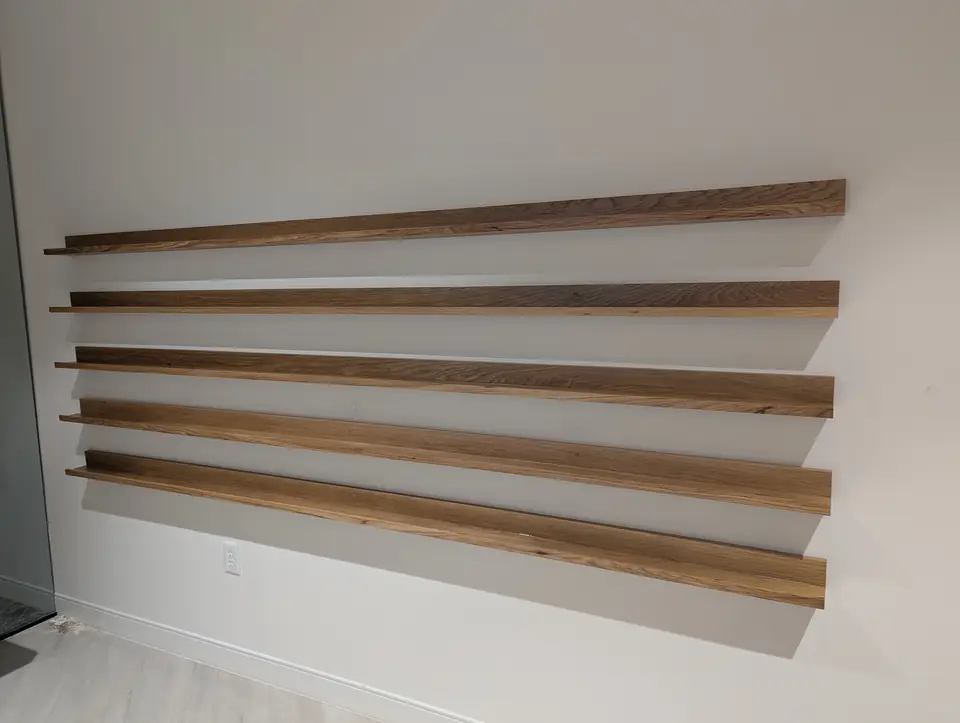
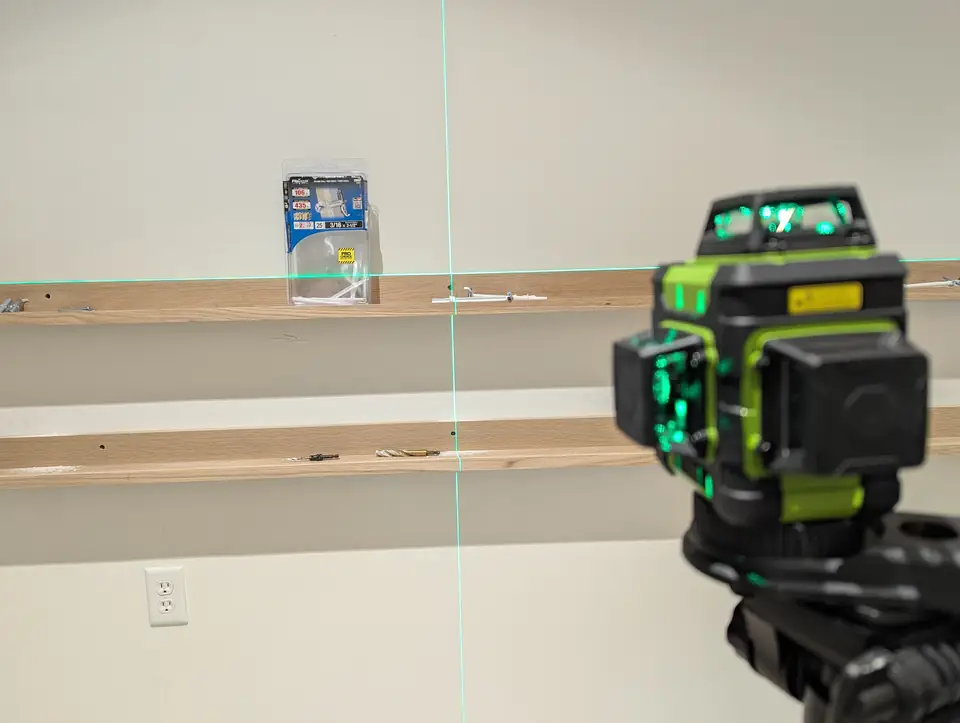
- Lines. Shelves, rails and frames sit on one level line; Daniel’s floating wood shelves were set on a single laser line for that reason.
- Fit to the room. Trim is scribed to uneven walls and floors instead of leaving tapered gaps.
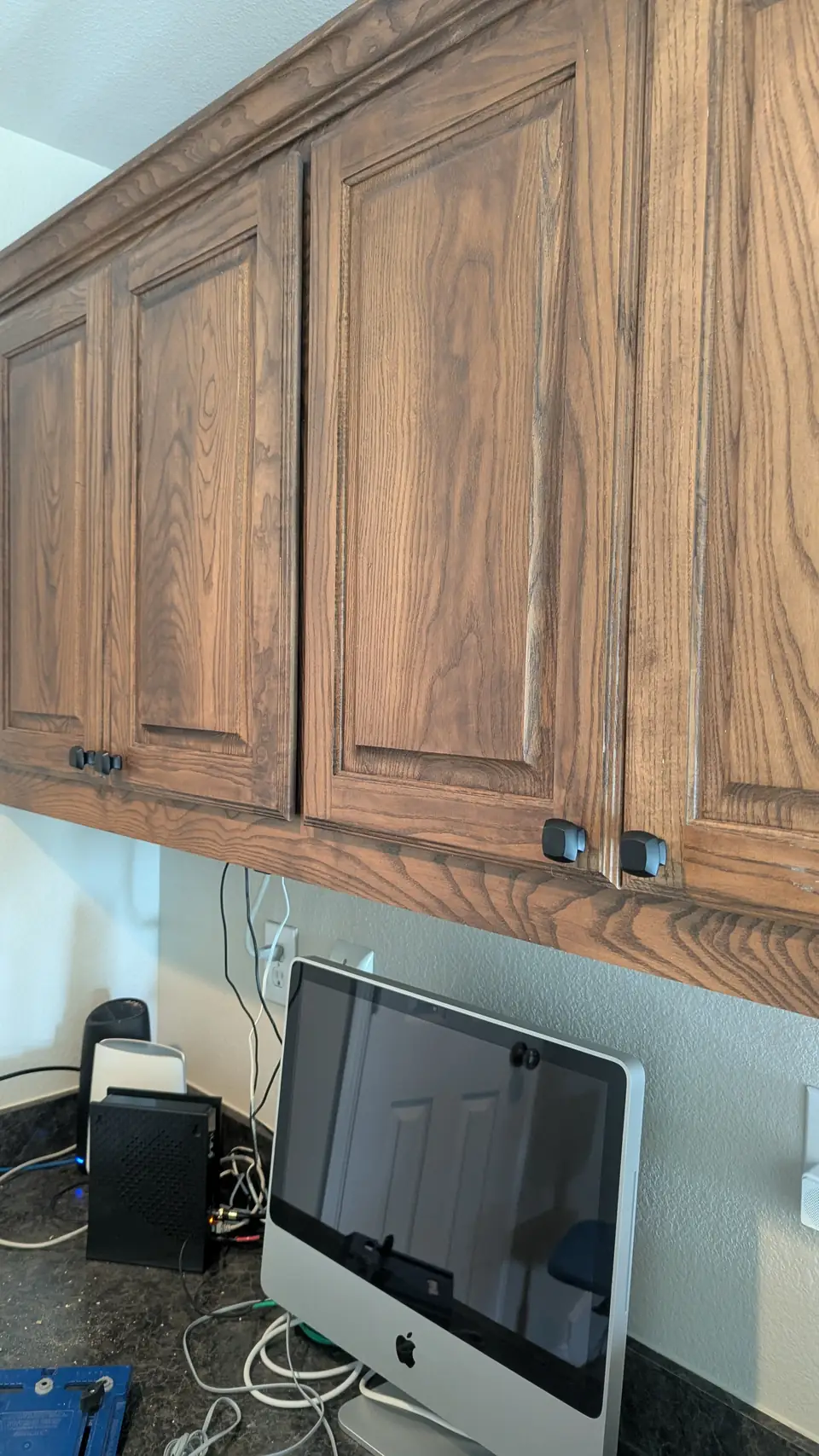
- Hardware. Knobs and pulls sit at the same height, as in the cabinet door repair where a jig placed each knob.
Are before-and-after photos enough?
No. They show that something changed, but a wide shot in good light hides almost everything that separates careful work from quick work. They also can’t show whether the work held up.
Ask for three other kinds of photos. Close-ups of corners, joints and edges. In-progress photos that show what ended up hidden: the framing, blocking and prep behind a finished wall. Daniel’s interior wall opening photos, for example, show the new framing and insulation before the drywall closed it up. And photos of how the home was protected during the work. Then ask how long ago the job was done and whether it has held up. Our project gallery includes in-progress photos from Daniel’s own jobs.
How to tell if someone can handle custom work
Custom work, such as a built-in, a run of matched trim, a mantel or a new door in an old opening, is where the difference between a general handyman and a strong carpenter shows. Good signs:
- They ask what the piece will hold and how you’ll use it before talking about style.
- They measure carefully and talk about what is behind the wall and how the piece will be fastened.
- They can describe the build: materials, how parts join, how it meets the existing trim, and the finish.
- They can show you similar work, ideally in close-up and in progress.
- They tell you plainly which parts they would hand to a cabinet shop, an electrician or another trade.
Want to know how Daniel would build it? Tell Daniel about it
What to look for in a carefully kept home
In a home that has been looked after for years, the job is often to match what is there: the trim profile, the paint sheen, the way an older door was hung. Look for someone who notices those things and asks about them. Respect for original materials matters too, especially in older houses; reliable help for an older Dallas home goes further into that.
Care for the house is the other half. Floor runners on the path in, drop cloths under the work, plastic containment around dusty jobs and masking before paint are the habits to look for. So is communication: you should know what is happening and hear about any surprise before it is dealt with. For insurance, scope and payment questions, see questions to ask before hiring a handyman.
Finding someone who actually finishes the details
Details go unfinished for predictable reasons: the job was priced too tight, the crew is rushing to the next site, or the leftovers seem too small to come back for. Touch-up paint, a missing piece of trim, cover plates, caulk at the last joint and a door that needs one more adjustment are the usual casualties.
Ask how they end a job. Good answers include a walk-through with you, a short list of anything still open, and cleanup before they leave. Check that the estimate mentions patching, touch-up and cleanup rather than just the main task. Keeping your own list helps too; see how to make a handyman punch list. And consider starting small: a short list of repairs shows you how someone works before you hand them a bigger custom project.
Warning signs in finished work
- Wide gaps filled with caulk instead of trim that was fitted or scribed.
- Nail holes left open, or hammer dents around them.
- Shelves or frames that are visibly out of level.
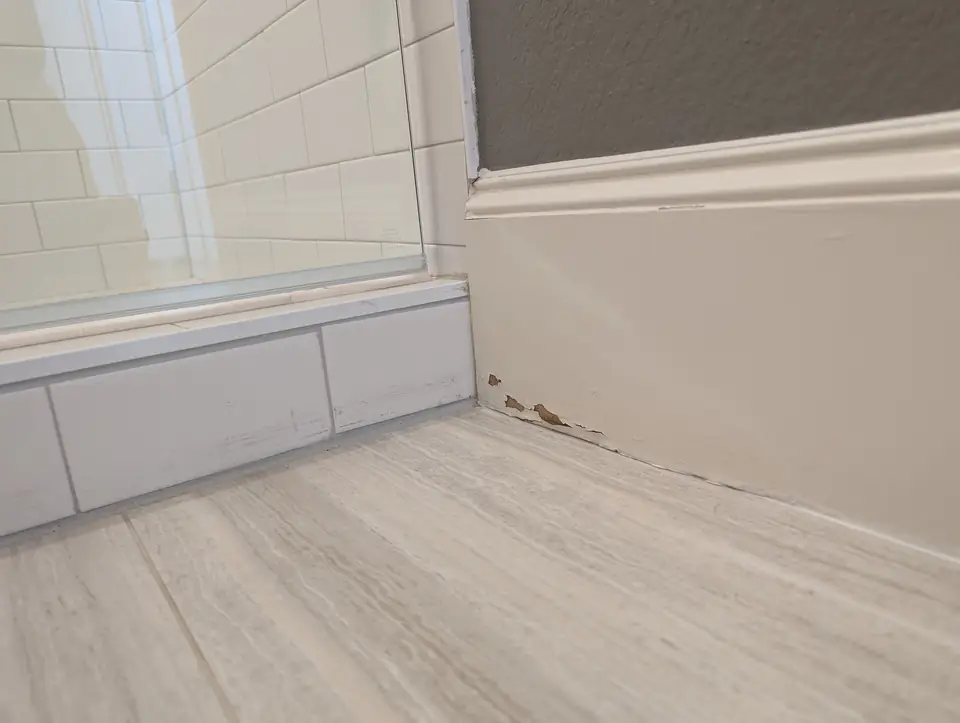
- Paint on hinges, hardware, glass or the floor.
- “It’ll be covered by paint” as the answer to a poor joint.
- Dust and offcuts left behind, or furniture that wasn’t protected.
Judge our work the same way
Carpentry is The DFW Handyman’s favorite category, and Daniel brings 25-plus years of hands-on work across remodels, additions and high-end carpentry to it. Look at the close-ups and in-progress shots in our project gallery and the range on our carpentry page, and ask us the same questions you would ask anyone. Our work is backed by our one-year warranty on workmanship.
When you’re ready, describe your project through Request service. We’ll tell you how we would approach it, and if part of it belongs with another trade, we’ll say so.