
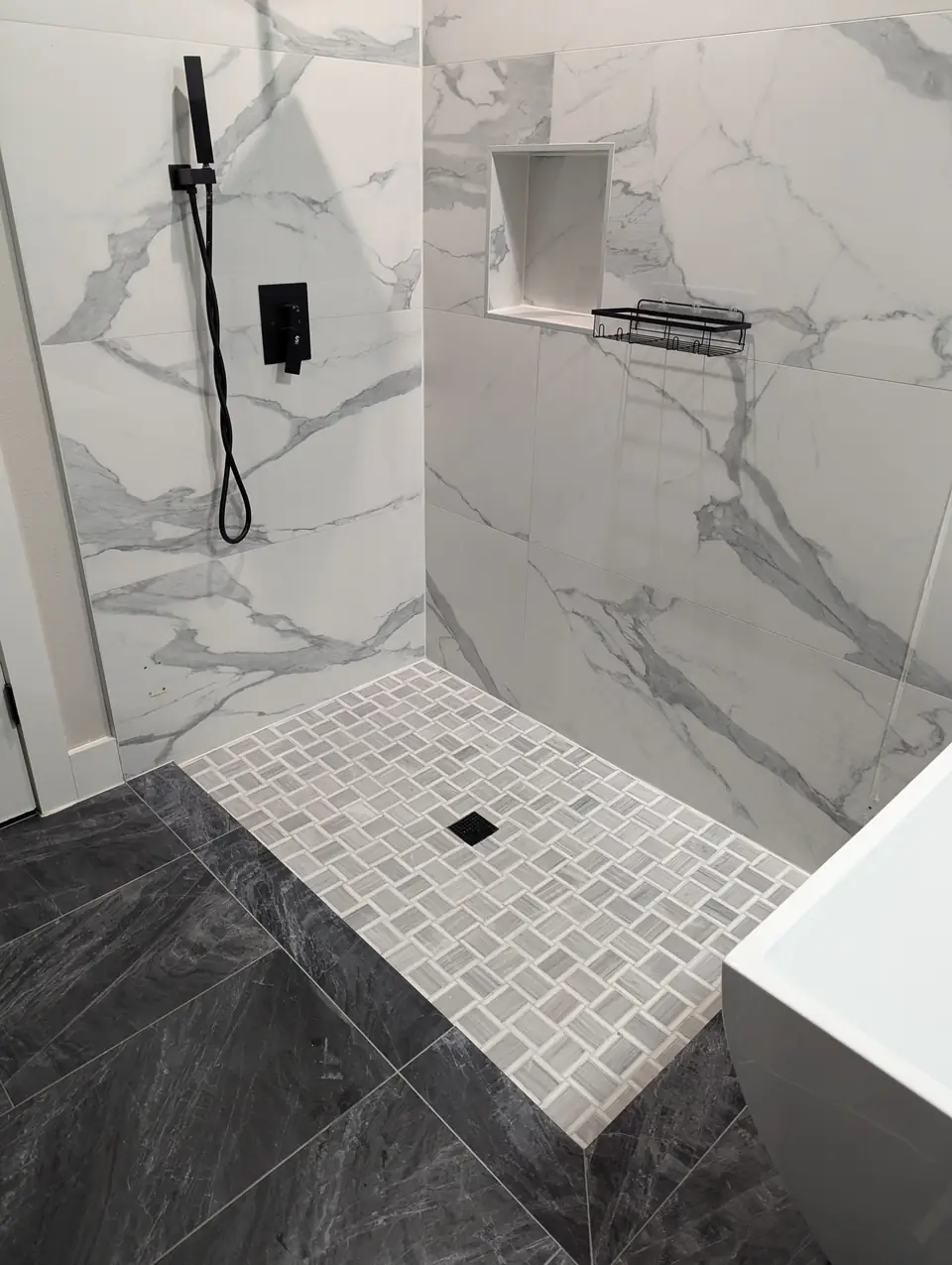
Key takeaways
- A few cracked or loose tiles can be replaced one at a time without disturbing the rest.
- Stained, cracked or crumbling grout can be removed and redone; new grout over old does not hold.
- Leftover tiles from the original job are the easiest way to get an exact match. Look in the garage and attic first.
- Cracks that run in a line across several tiles, or a tile that loosens again after repair, point to movement underneath.
- Small repairs and regrouting are handyman work. A full shower rebuild or a new floor across rooms is a tile or remodeling job.
In this guide
Cracked or loose tiles: replaced one at a time
A handful of cracked bathroom tiles does not mean a new floor. The grout around a damaged tile is cut out first, so the tile can be broken out without stressing its neighbors. The old adhesive underneath is scraped flat, a new tile is set in fresh thinset at the same height as the ones around it, and the joints are grouted to match once the thinset has cured.
A kitchen tile that keeps coming loose is a different signal: too little adhesive behind it, a surface that flexes, or water that has broken the bond. Gluing it back rarely lasts. The fix is to lift it, clean the tile and the floor down to a sound surface, and reset it with full coverage. If it lets go again, or its neighbors start sounding hollow, the cause is underneath (see below).
Tile, backsplash and grout repairs are part of our everyday projects, and the goal is always a repair that is hard to find.
Regrout, reseal or retile?
Grout is the cement-based filler between tiles. It wears, stains and cracks long before good tile does, which is why regrouting is so often the right answer. Regrout when:
- The tiles are sound and firmly bonded, but the grout is stained, cracked, sandy or missing in spots.
- Grout along a shower wall or around a tub is crumbling. The old grout is raked out to a consistent depth, the joints are cleaned, and new grout is packed in. A shower wall is a common regrout job.
- Stains won’t clean out. Stained grout can be removed and redone, often in a darker color that hides wear better. Grout spread over old grout doesn’t bond and flakes off, so the old grout has to come out.
- The joint where the tile meets the tub, the shower pan or another wall is cracked. That corner joint should be flexible caulk, not grout, because those surfaces move differently. When should you recaulk a tub, shower or sink? covers it.
- Retile instead when tiles are loose or hollow across an area, many are cracked, or water is getting behind the tile. In a shower, soft drywall next to the tile, a musty smell, or tile that moves when you press it means the problem is behind the surface, and new grout will only cover it.
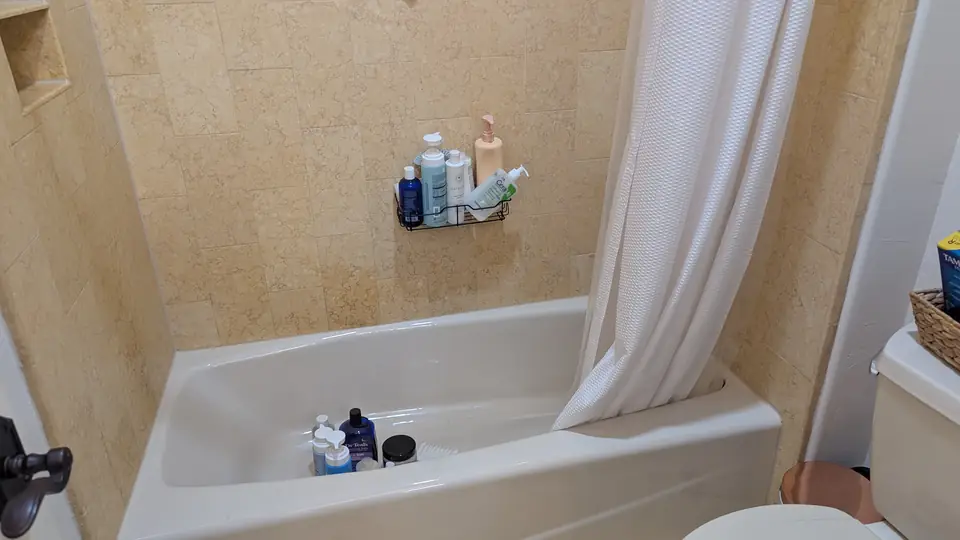
Grout as an update, matching, and sealing
As an update, regrouting is one of the smaller jobs that changes how a bathroom looks the most. Clean, even grout lines in a consistent color make older tile look cared for. What drives the effort is the square footage, how hard the old grout is to remove, and how many joints need caulk instead of grout.
Leftover tiles are the best possible match, because they came from the same production run. Builders and previous owners often left a box in the garage, the attic or under a stair. Even a few spares are enough for a small repair.
When the original tile is discontinued, a tile can be borrowed from a hidden spot, such as behind the toilet or under the vanity, and that spot filled with a close match. Salvage sources sometimes have tile from the same era. Or a deliberate contrast, like a border or an accent row, can look better than a near miss.
Grout color matters as much as the tile. New grout dries a different shade than it looks wet, and old grout has changed with age, so the color is tested on a spare tile or a hidden joint and compared in daylight. When the old grout is badly stained, regrouting the whole wall in one color often looks better than matching a stain.
Cement-based grout is porous, so in a busy bathroom a penetrating sealer helps it resist stains and water. It goes on clean, cured grout and is worth renewing when water stops beading on the surface. Some grouts are made not to need sealing; the label says which you have.
Cracked tile or crumbling grout? Tell Daniel about it
Chips, uneven edges and a loose threshold
- Chips. A small chip in a glazed tile can be filled with a color-matched repair compound and leveled. Up close you may still see it, but across the room it disappears. A chip that has cracked the tile, or one in the middle of a walkway, is usually better replaced.
- Uneven edges. When one tile edge sits higher than its neighbor, tap it: a single hollow, lifted tile can be taken up and reset level. Uneven edges across a whole floor mean the tile was set unevenly or the floor is not flat, a bigger job. A raised edge in a walkway is a trip hazard worth fixing soon.
- Loose threshold tile. The stone or tile threshold at a bathroom door takes every footstep. When it rocks, it can be lifted, cleaned, and reset in fresh adhesive, with the joints on each side regrouted or caulked. If the floor under the threshold is soft, that needs attention first.
When the problem is underneath the tile
Tile is rigid. When the floor or wall under it moves, tile and grout are the first to show it. North Texas clay soil swells and shrinks with moisture, so some seasonal movement is normal in many homes, and Reliable help for an older Dallas home explains when a crack is more than cosmetic. If a tile crack lines up with the signs below, it makes sense to understand the movement before replacing tile that will only crack again. Signs that movement underneath is the cause:
- A crack that runs in a line through several tiles, often continuing in the same direction across the room.
- Grout that cracks again in the same place soon after it was repaired.
- Several tiles in one area that sound hollow when tapped.
- Other signs nearby: doors that stick, cracks in drywall above doorways, gaps at baseboards.
- A floor that flexes or feels soft when you step on it.
Handyman or tile contractor?
A handyman is a good fit for replacing a few tiles, resetting a loose tile or threshold, regrouting a wall or floor, filling chips and recaulking. A contained shower repair can be handyman work too, as long as the hidden layer, the waterproofing, is done properly. Daniel’s shower tile and waterproofing repair shows what that looks like for one section: the area opened up, a waterproofing membrane applied and allowed to cure, then new tile set, grouted and sealed at the changes of plane. A tile contractor or remodeler is the better call for a full shower rebuild, a new shower pan, new tile across several rooms, or a layout change. What’s the difference between a handyman and a general contractor? goes into the general line.
A small tile repair is rarely a single step. Thinset cures before grout goes in, and grout cures before the area gets wet, so a repair can need a return visit, depending on the products and the room. Ask for the cure times up front, especially if it is your only shower.
Send photos of the damaged tile, a wider shot of the room and any spare tiles through Request service. We’ll tell you whether it looks like a repair, a regrout, or something that needs a closer look underneath.